Is your creative spirit crying out for a little TLC? Always wanted to write but don’t know where to start? Need to reboot your writing mojo and be inspired to tackle that project you’ve been thinking about forever?
Come along and regain your love of writing and life at the next Relax and Write Retreat From midday FRIDAY 20 October – 3 pm SUNDAY 22 October 2023
Join like-minded women in a fun and supportive environment discovering just how much some deep relaxation can ignite your imagination and get you writing again. Relax and unwind with gentle morning yoga sessions and be inspired by innovative workshops to help move those stories out of your head and onto the page.
“I feel transformed, as a writer and as a human being.”
Bianca Millroy – writer and retreater
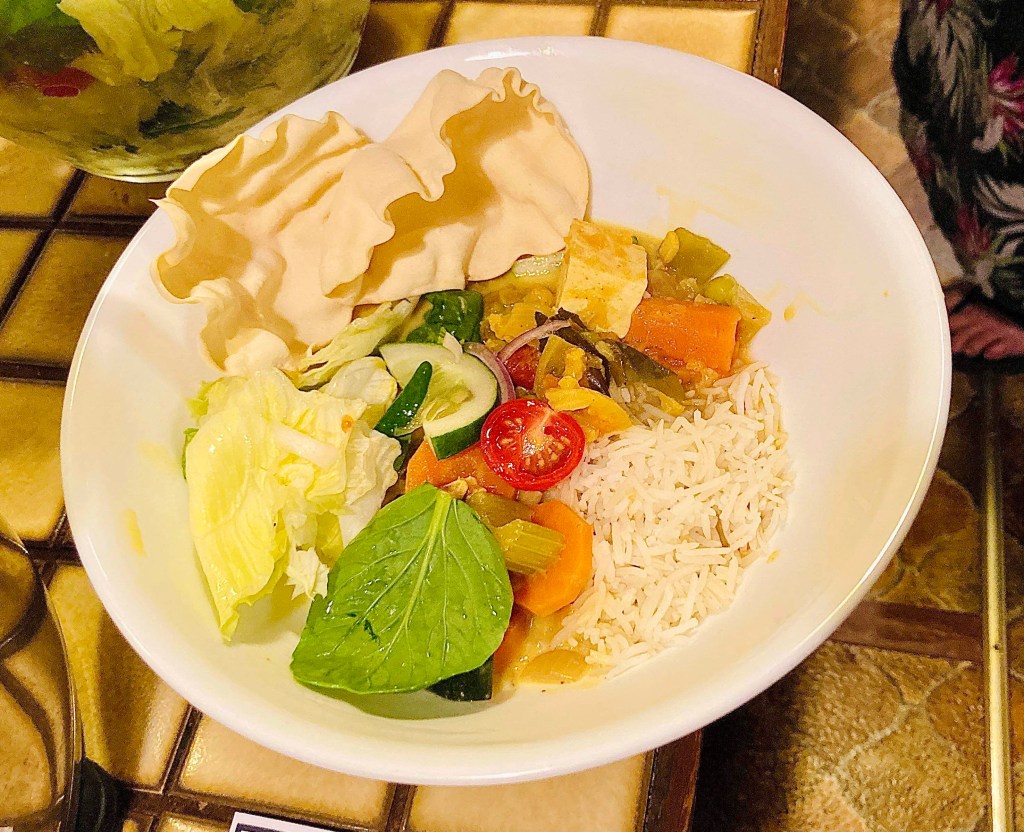
The program includes two yoga sessions, four workshops to get you writing, plus advice on submitting your work. Two nights comfortable single accommodation with bathrooms shared between two women, plus delicious vegetarian meals and a special readings night around the fire are included.
“The fully-catered retreat environment was comfortable and stress-free. An atmosphere that encourages, motivates and inspires.” Gay Liddington – writer and retreater
Connect with other creative women in a beautiful, peaceful location and remember your creative self. No more putting your dreams on hold. Treat yourself to this special weekend nurturing your writing spirit. You deserve it!
RETREAT PROGRAM
All activities are optional
FRIDAY 18 OCTOBER 2024
ARRIVAL from midday
4 pm – Meet and Greet
4:30 – 6:30 WORKSHOP 1– Your Stories
6:30 DINNER
SATURDAY 19 OCTOBER
7:15 am – 8:30 – Gentle morning yoga and breathing
8:30 – BREAKFAST
10:00 am – 12:30 pm – WORKSHOP 2 – Character and Dialogue
12.30 pm – LUNCH
1 – 4:00 – FREETIME and FEEDBACK SESSIONS
4 – 6:00 pm – WORKSHOP 3 – Writing from start to finish – developing a plot and a plan
6:00 pm – DINNER
6:45 – 7:30 pm – Readings around the fire
SUNDAY 20 OCTOBER
7:15 – 8:30 – Gentle morning yoga and breathing
8:30 – BREAKFAST
10:00 – 12:30 – WORKSHOP 4 – Where and how to submit work, goal setting, questions and collage
12:30 – LUNCH
3 pm DEPARTURES
Editorial feedback sessions with Edwina available on request $75 extra for those needing advice on a project. Massages will also be available.
HOW MUCH?
COST for the weekend of writing, fun and feasting, including comfortable single accommodation, with bathrooms shared between 2, all meals, 2 yoga sessions, 4 creative writing workshops and a readings night. Transport not included.
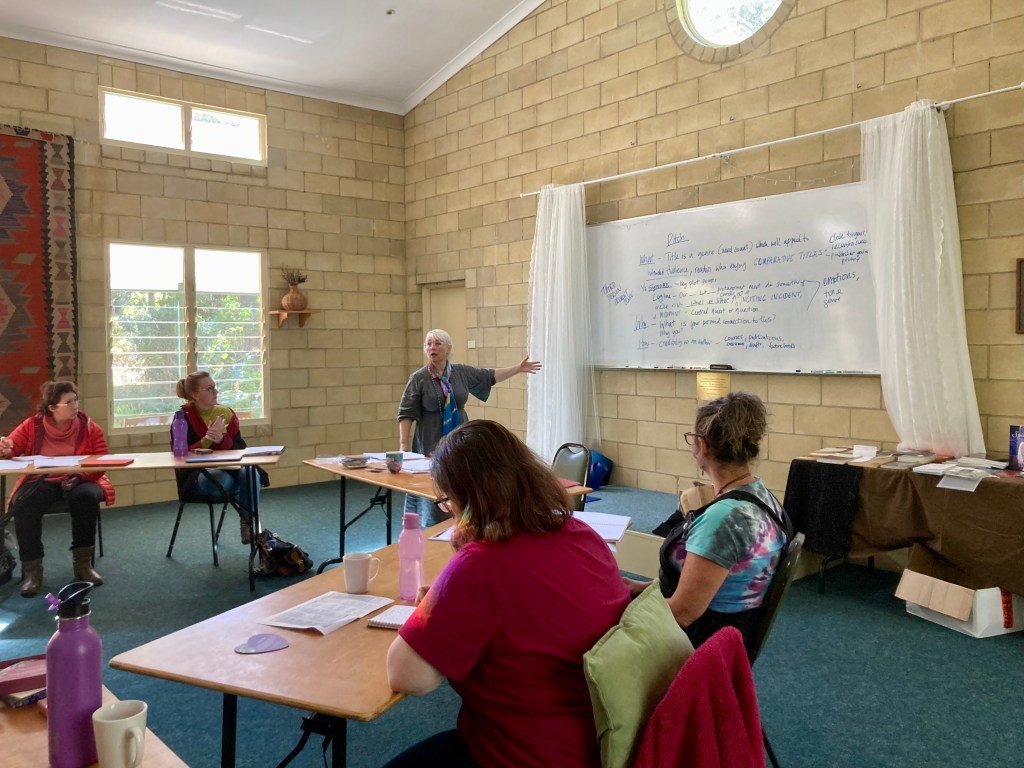
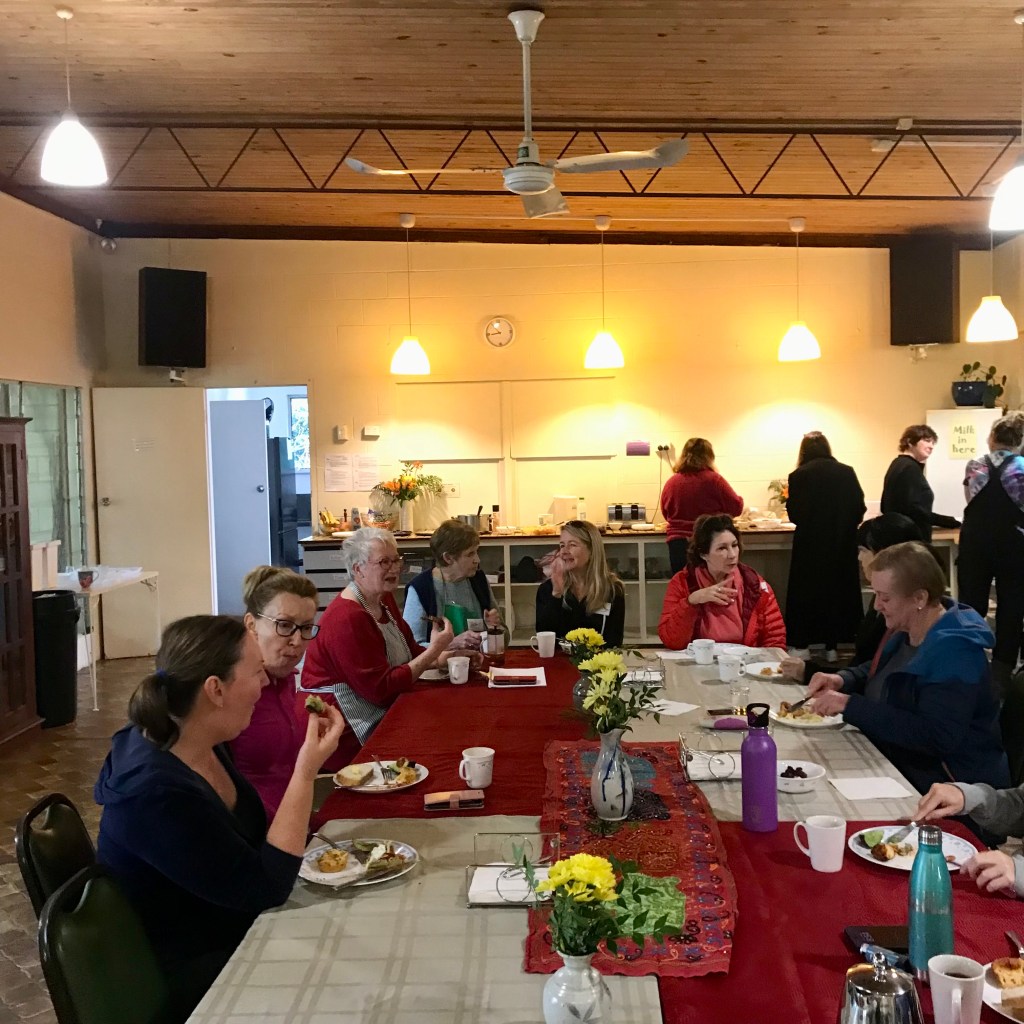
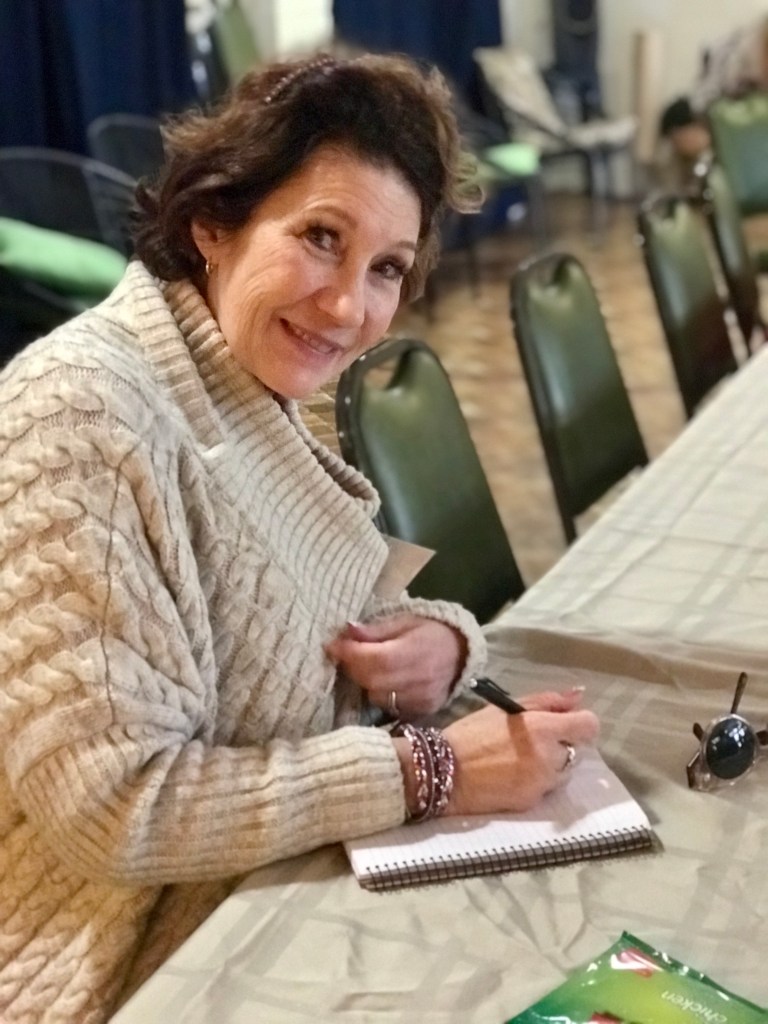
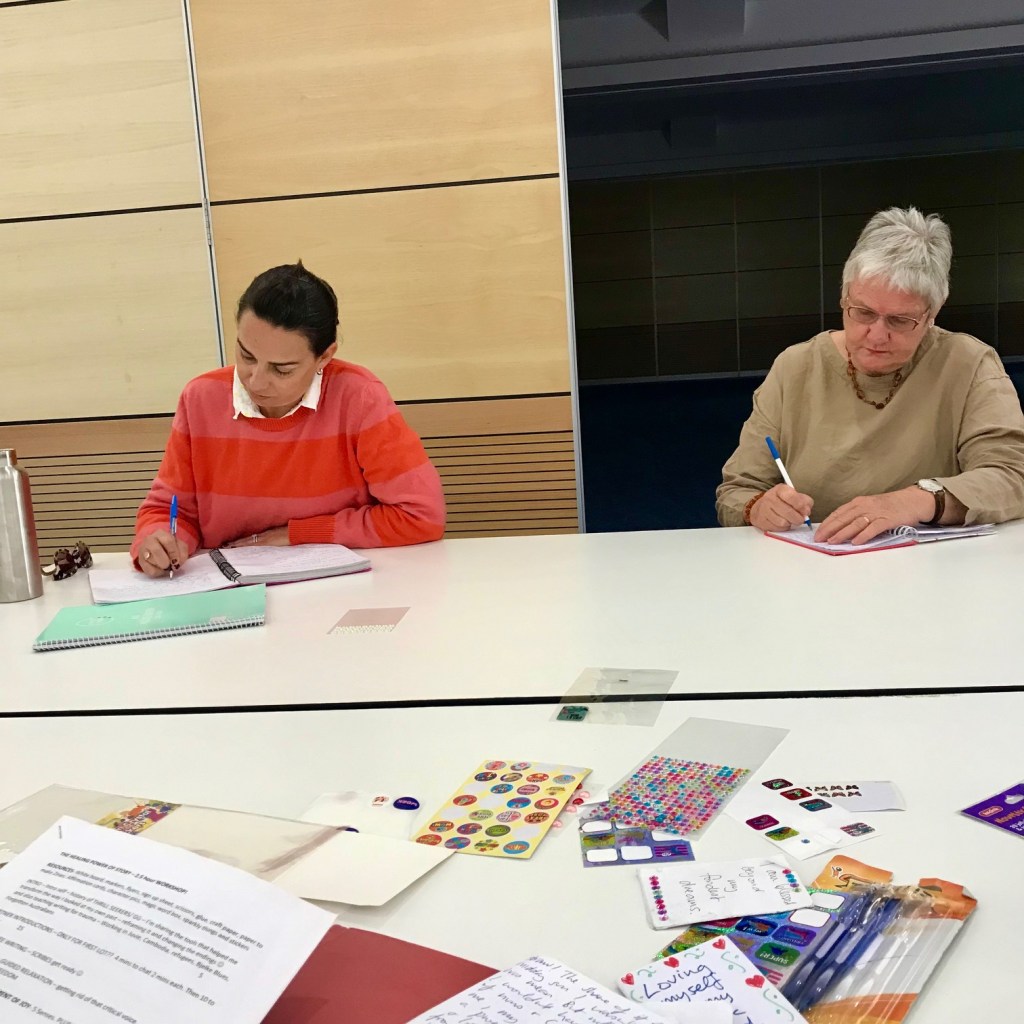
We wrote up a storm and shared our stories, connecting heart to heart, writer to writer, learning from each other and growing in our skills and abilities to get those stories out of our heads and onto the page.
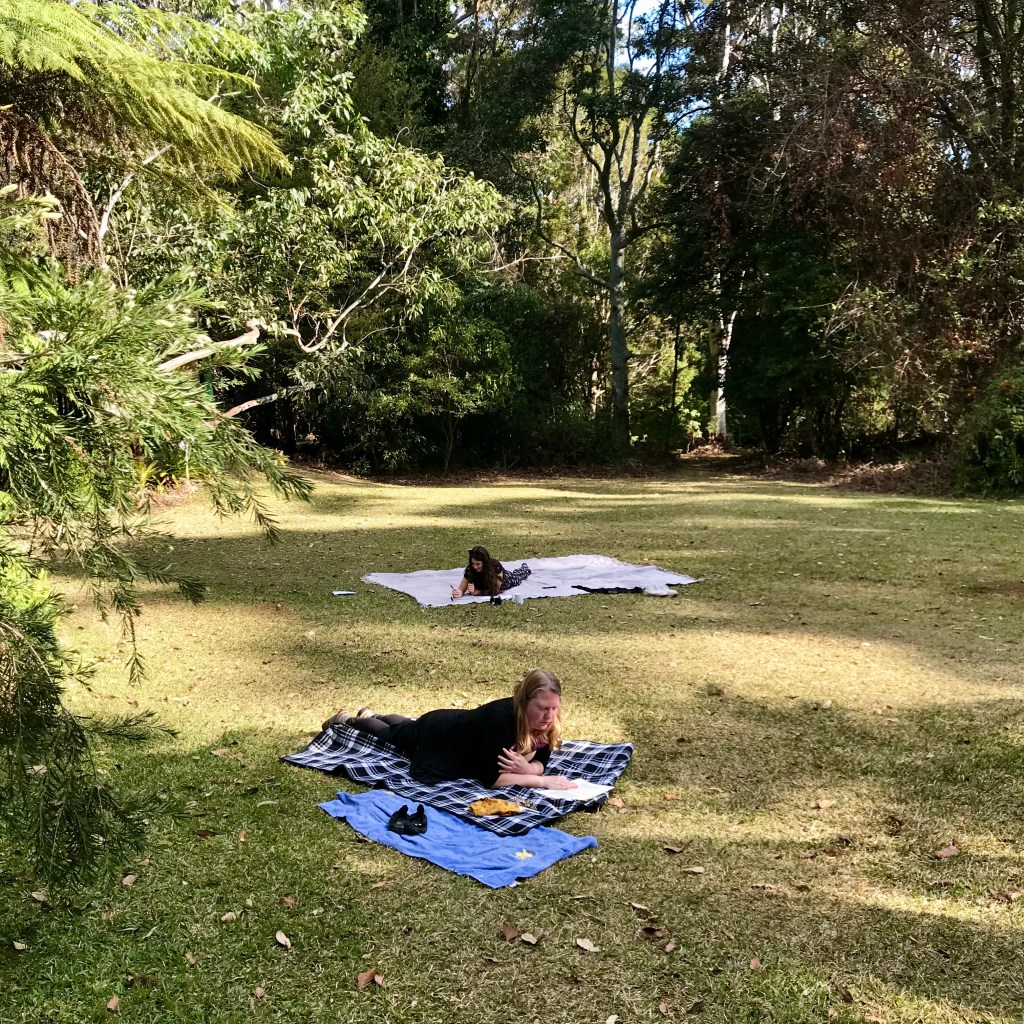
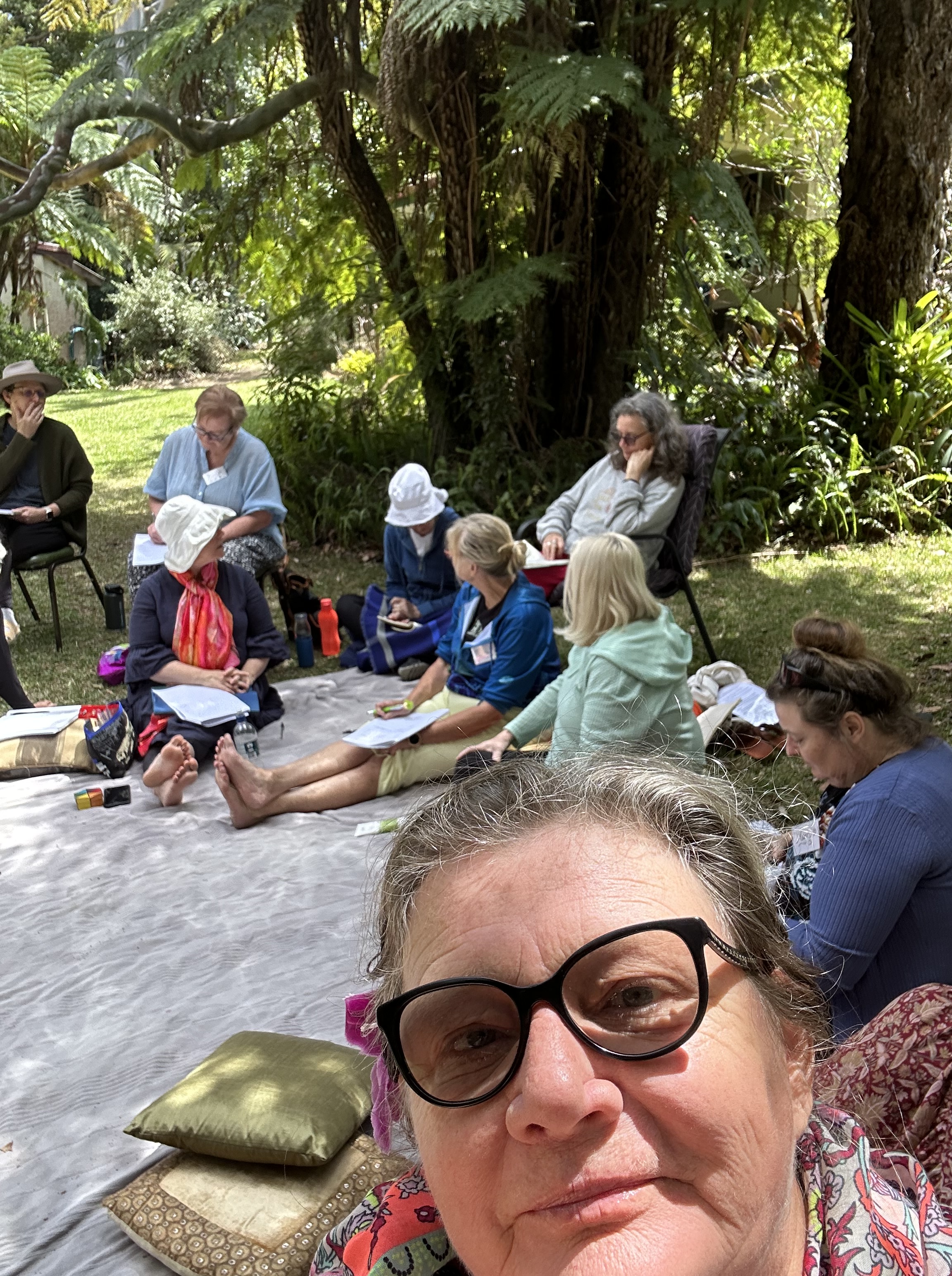
The weather was so beautiful we even had a session outside on a picnic blanket, listening deeply to the stories of the ancestors of this spectacular country, the Yugambeh people, and our own ancestors with their own stories to tell.
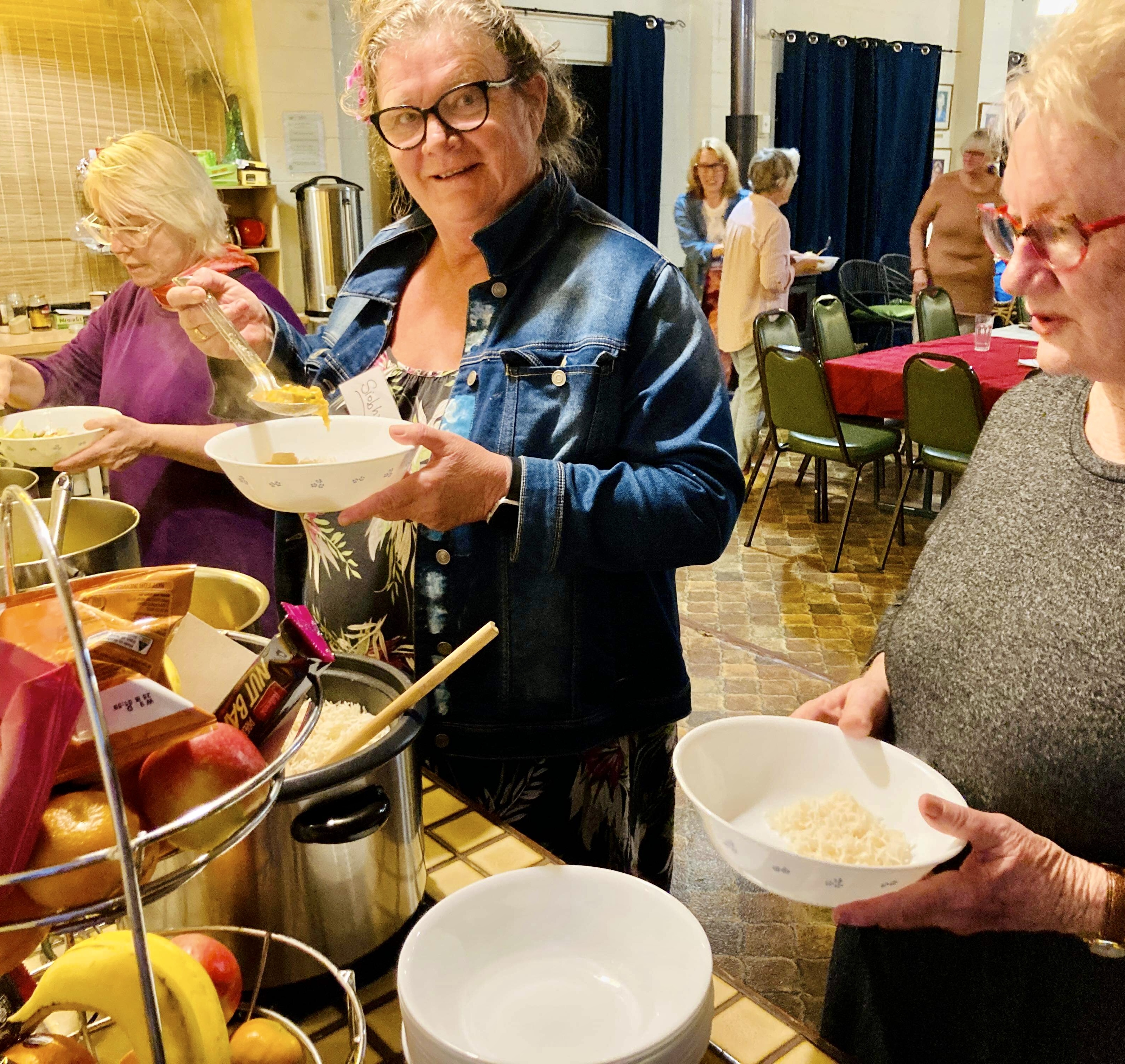
Chief cookie, the fabulous Gay Liddington, whose own memoir will be published in 2024 – WATCH THIS SPACE – tempted us all with delicious treats, and what a treat it is to walk into the kitchen at the end of a long day writing to smell a feast ready and waiting. THANK YOU GAY!
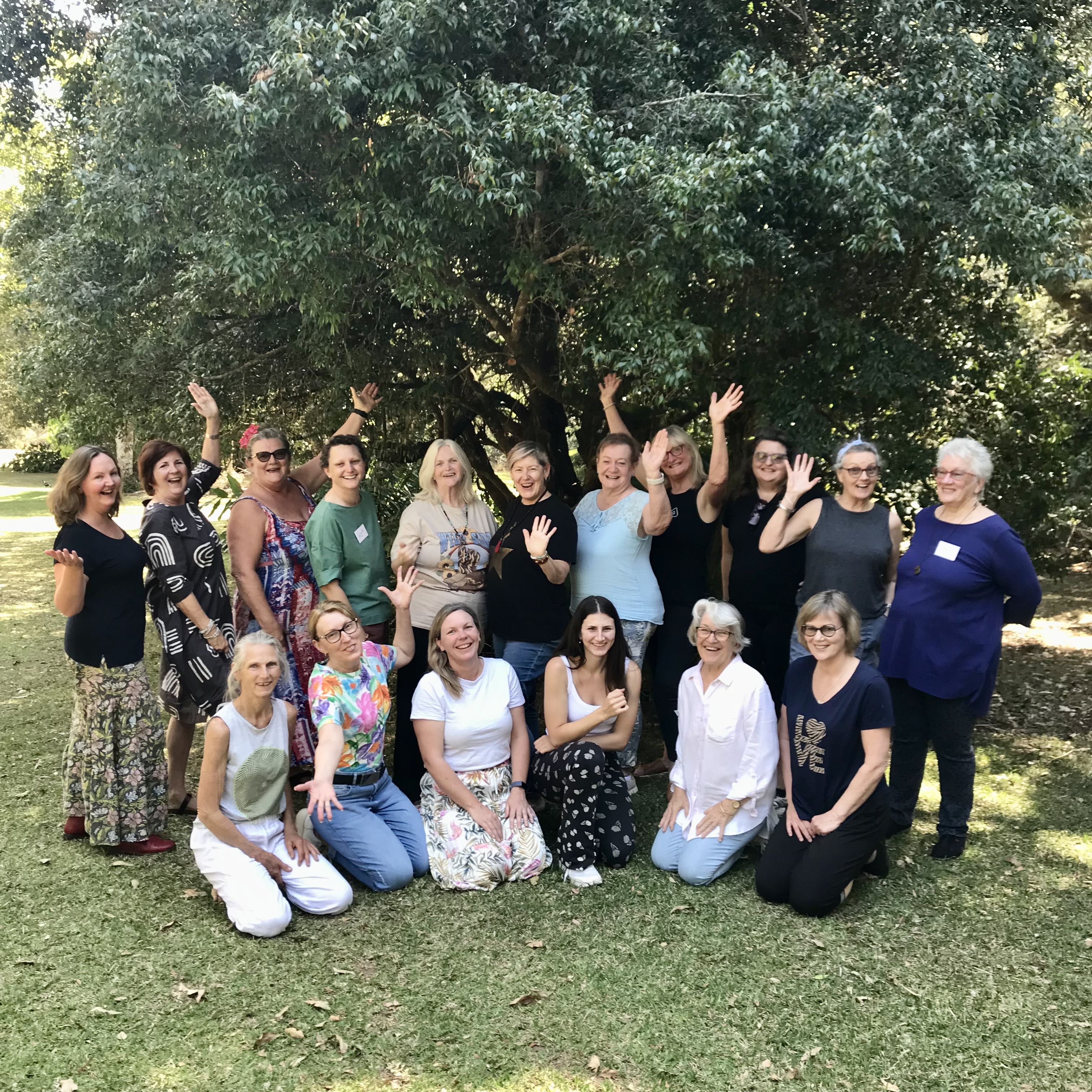
This retreat, we saw many repeat retreaters reconnecting and other new friends finding their writing gangs. Writers need other writers. When we are deeply immersed in our own stories, we can’t see our way through what can seem like a tangled forest of words, but other writers can look at our mess from a different angle and clearly see the path through the trees for us.
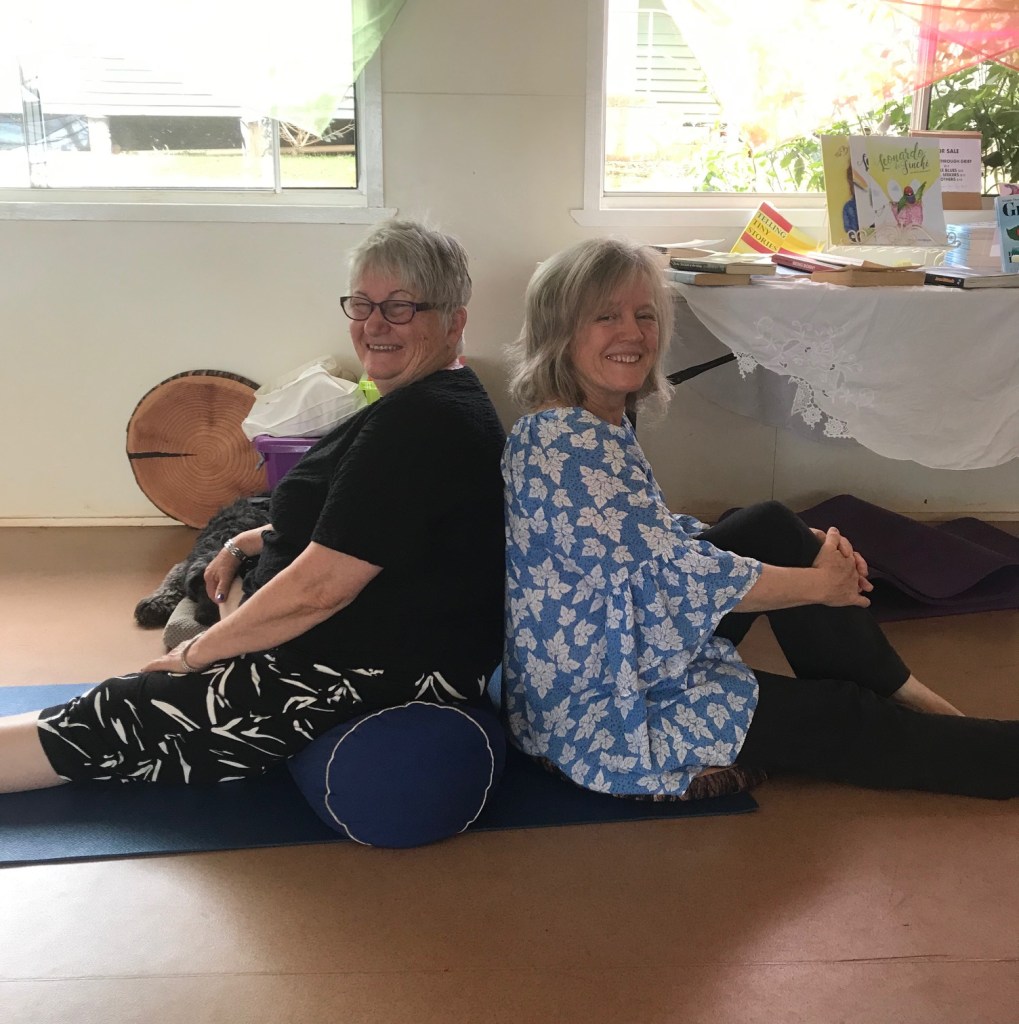
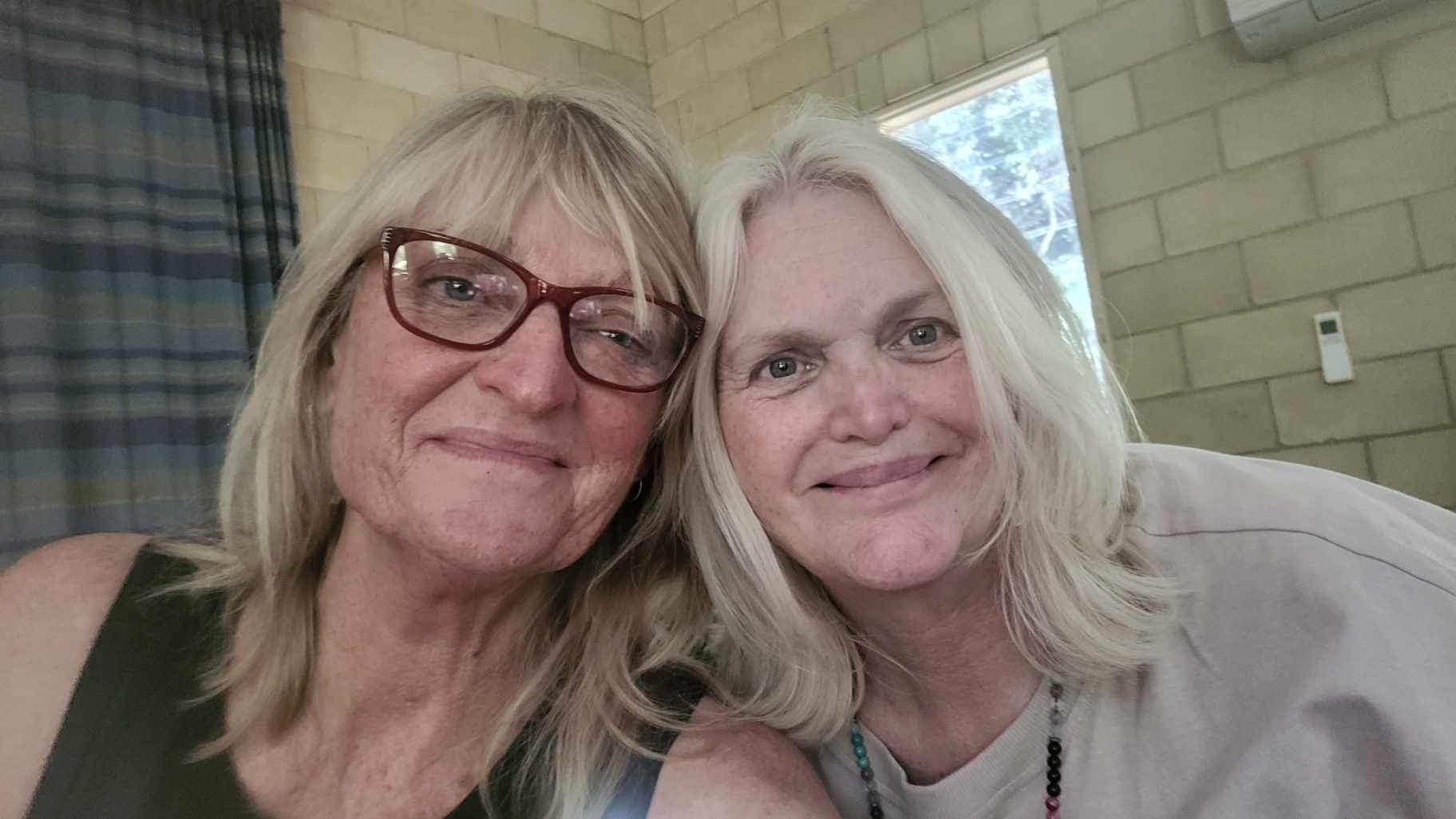
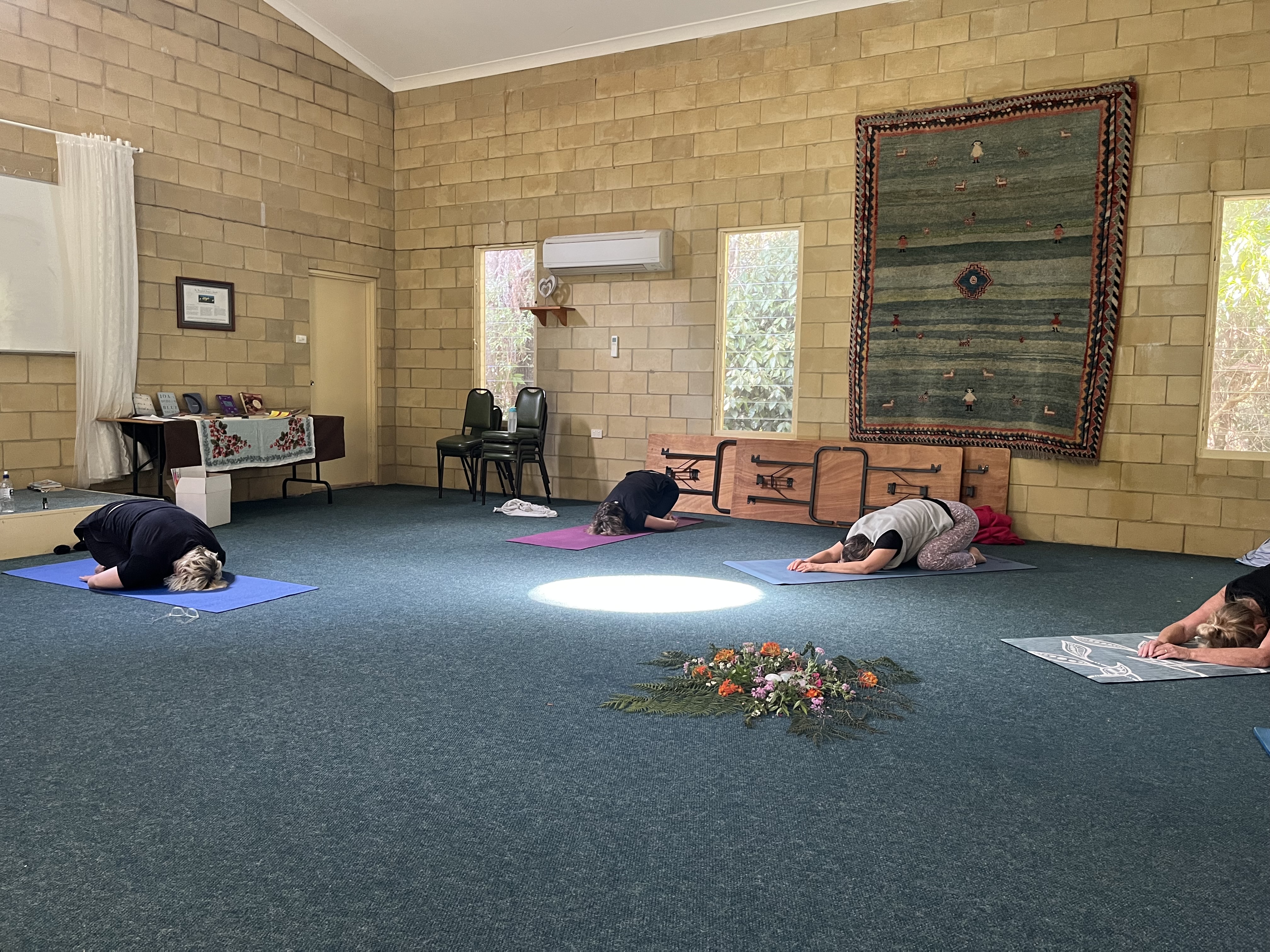
We laughed and we cried together, wrote, talked and even sang. We relaxed and stretched our bodies with yoga and indulged in healing bodywork treatments by the amazing Monique De Goey of Reconnect Holistic Bodywork.
Each one of us, yours truly included, came away feeling refreshed and renewed, with new ideas for our stories, a clear path ahead and writing companions to cheer us on and pick us back up again if we fall.
As Heidi would say, “I knew the mountains would make her well!”
Here’s what some retreaters had to say.
“A beautiful space of learning, reflection, sharing and mutual honouring of our stories.”
Retreat participant October 2023
“This had been such a wonderful experience for me. I love being in community and experienced wonderful community this weekend. The writing workshops were inspiring, exciting and ignited my creative side again.”
Retreat participant October 2023
“Thank you for all the inspiration, warmth, listening and LOVE.”
Retreat participant October 2023
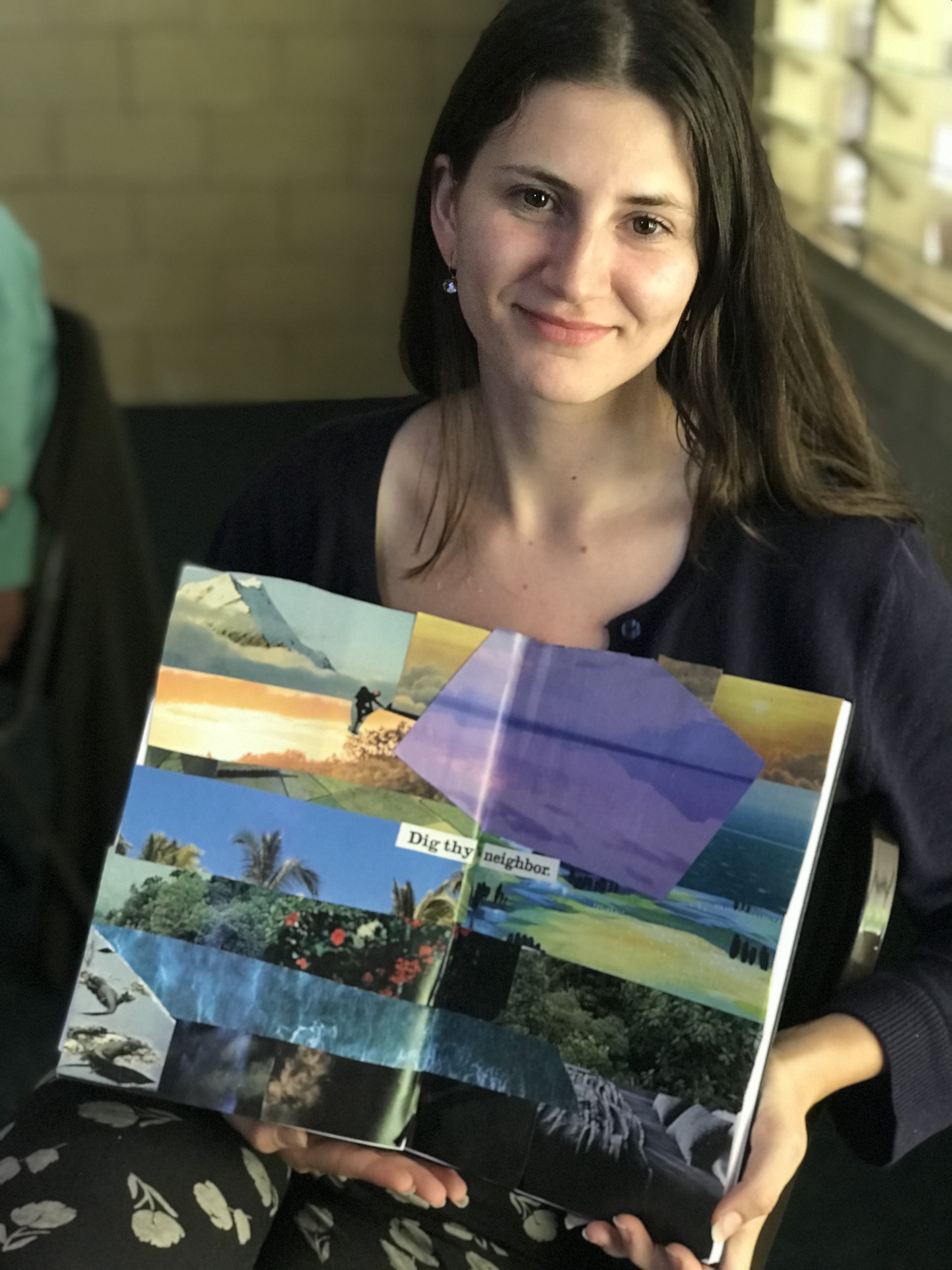
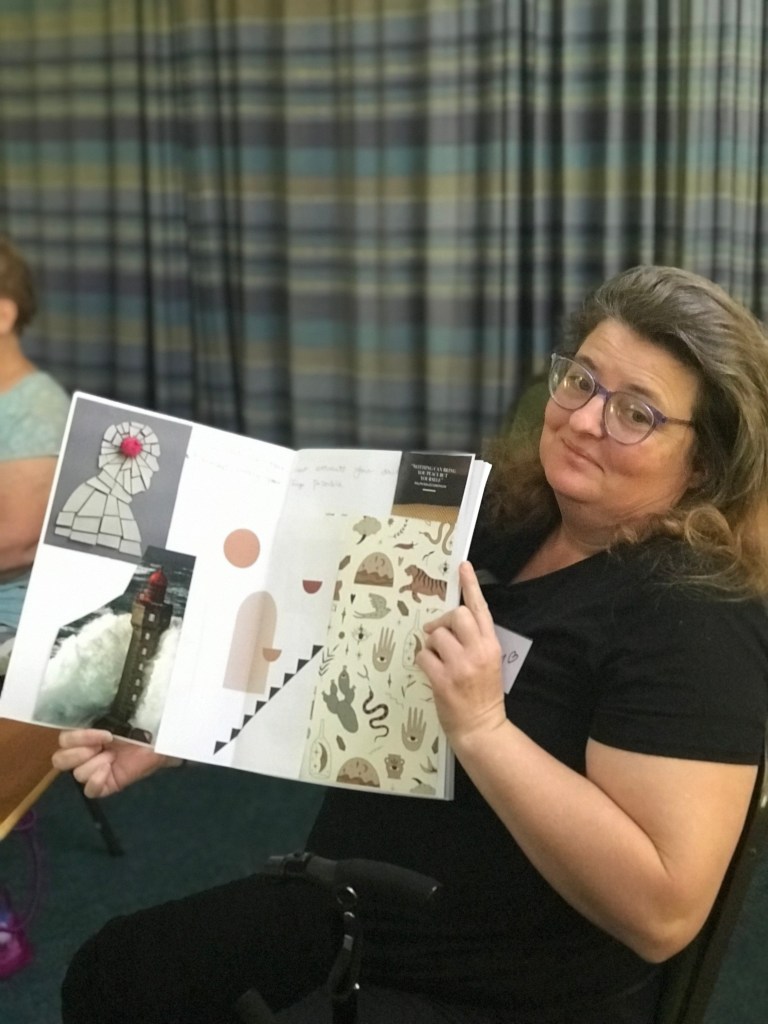
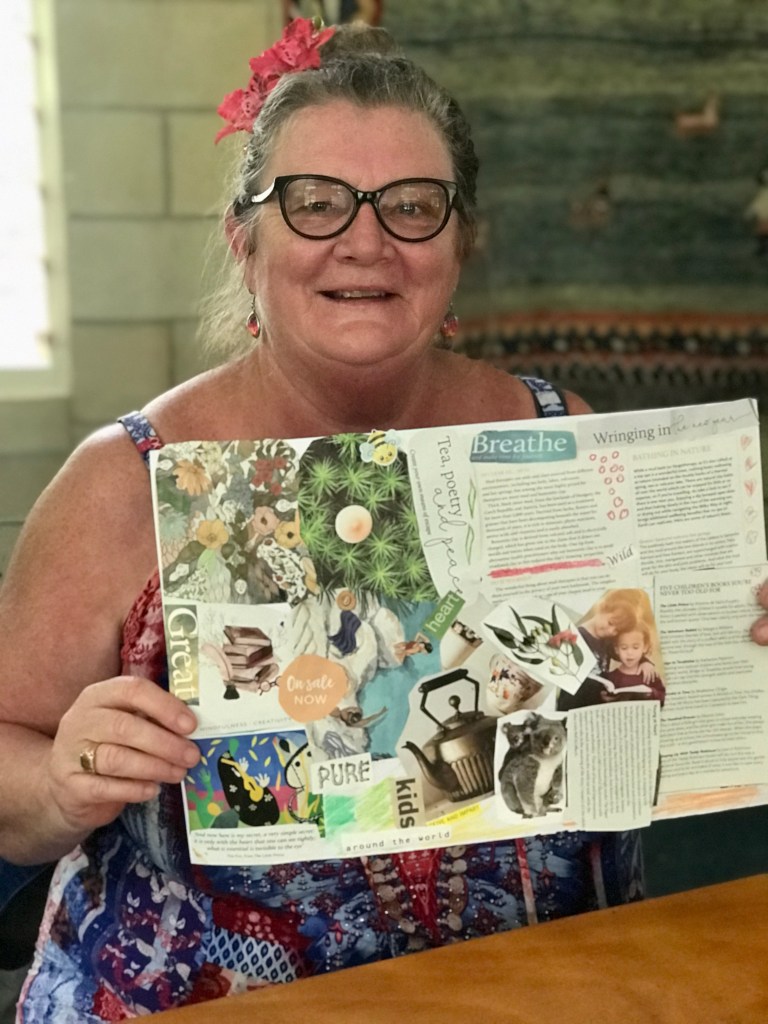
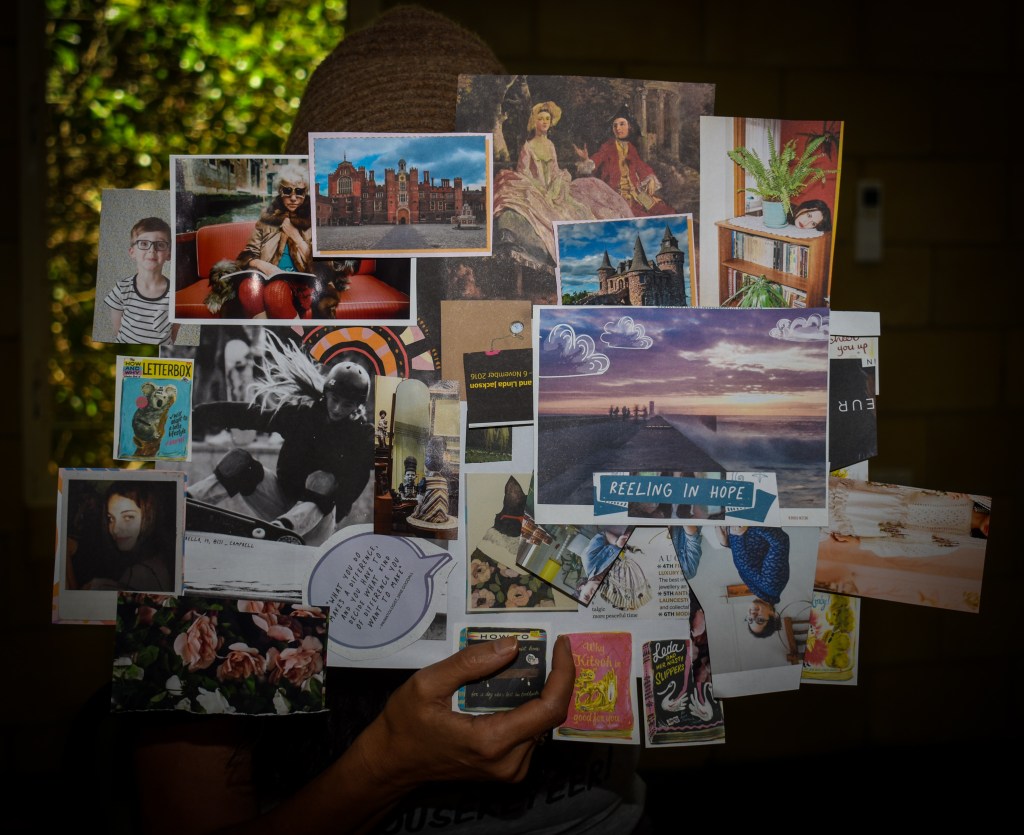
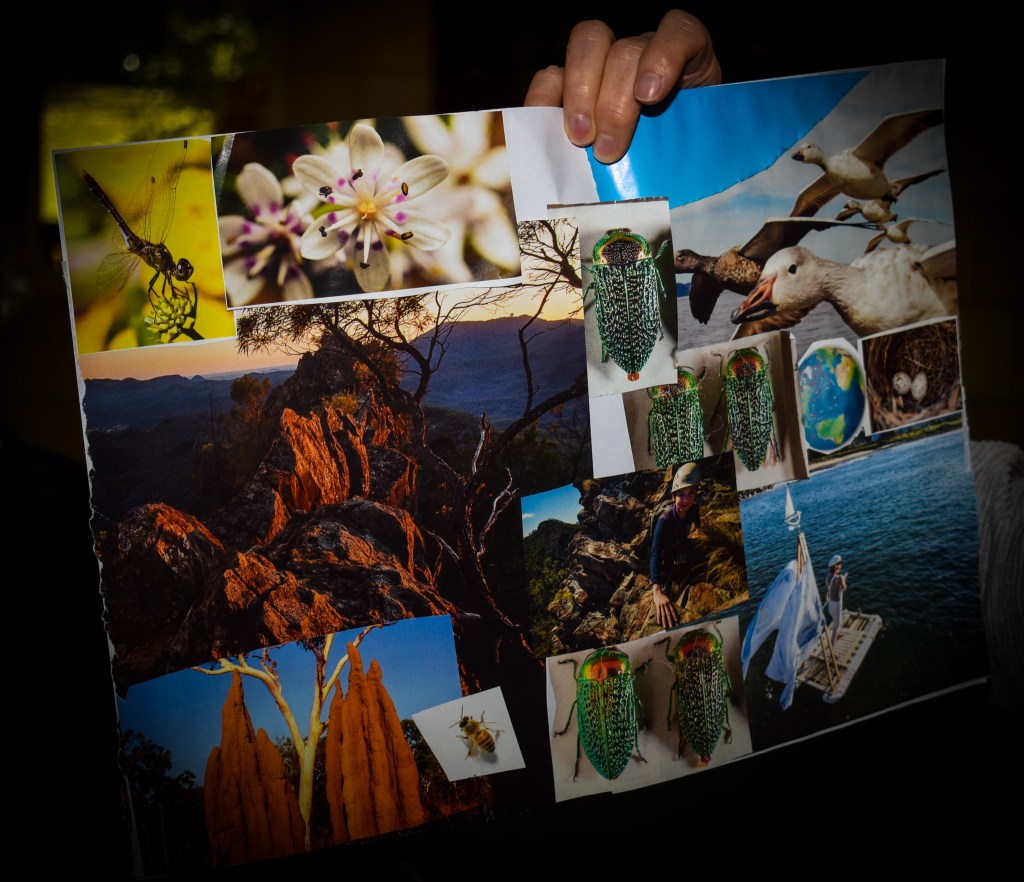
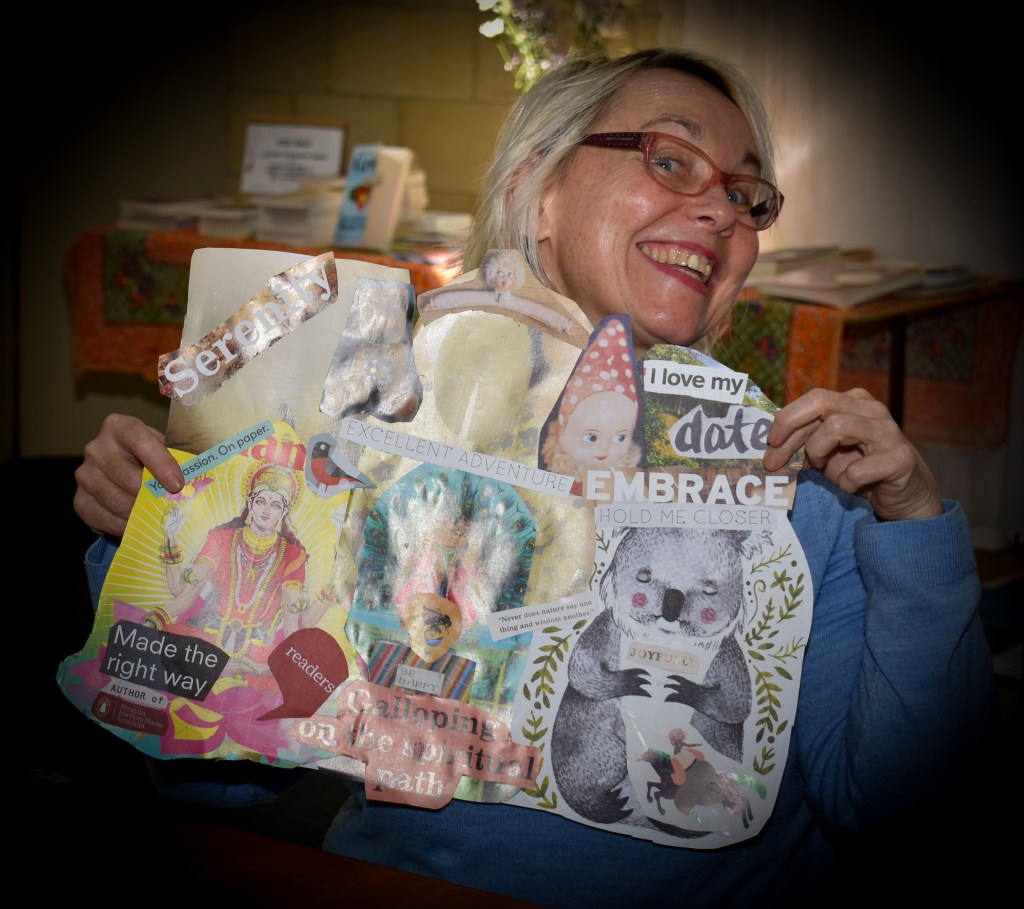
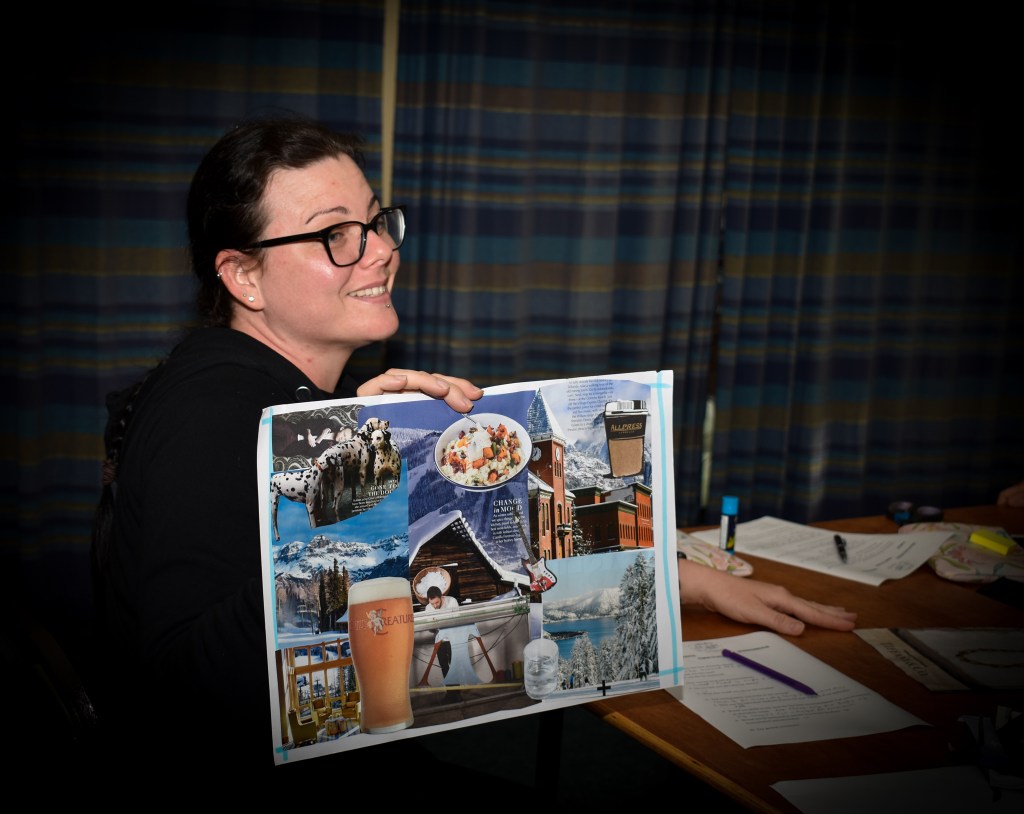
As is traditional, we finished our retreat with collages – here are some of the beautiful results!
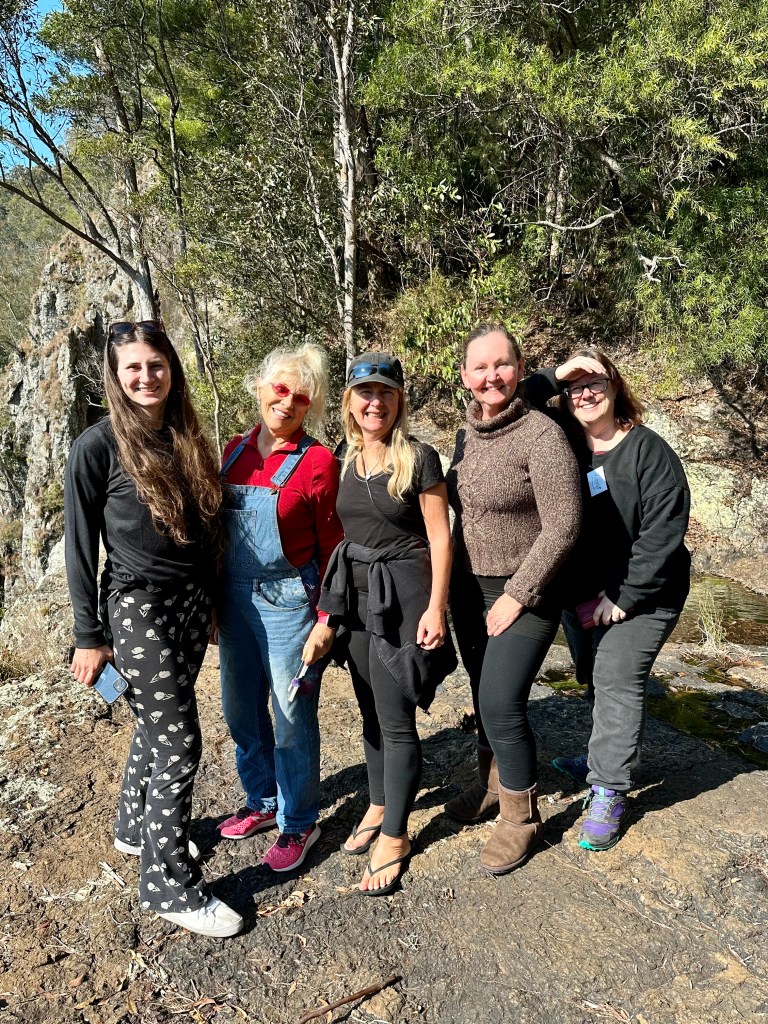
I’ve said it before and I’ll say it again, these retreats are only as special as the women who come along. I love how women come together and lift each other up. THANK YOU to all the wonderful women writers who made this retreat such a beautiful experience for us all, me included.
Sometimes I feel like the luckiest person in the world, getting to uplift and inspire others for my job!
Would you love to come along to the next memoir retreat? Dates are already set for next year’s Memoir and Life Writing Retreat – MAKE A NOTE – 18 – 20 OCTOBER 2024. You can book in HERE by paying your deposit. Hurry repeat retreaters are already signing up! Prices have gone up as retreat costs have risen along with everything else. I’ve created a tiered system for the waged and unwaged but if you’re still burning to come, but can’t see your way through to paying that much, DROP ME A LINE and I’ll see how we can help.
And, just quietly, a new JUST WRITE RETREAT of 4 or 5 nights is planned for early April, 2024. More on this soon!
So, who IS telling your story? Whether you’re writing memoir, fiction or screenplay, you need to make important decisions about which characters you’re going to give a voice.
WHO IS YOUR PROTAGONIST?
Who is the main character in your story?
If you’re writing memoir, even though many writers try to avoid it, YOU are the main character.
If you’re writing fiction you need to decide whose story is propelling the overarching narrative – that character’s goals and battles to achieve them is what drives the story forward. They are your protagonist.
If you have multiple protagonists, one character must have slightly more say than the others – this is the character who begins and ends the story. Other voices can be almost as strong but the protagonist has the final say. In my book Thrill Seekers I have three protagonists, Brian, his younger brother Douggie, and Beck, their friend. Because it is Brian’s goal – to protect his brother – that propels the entire narrative, he is the protagonist. He has the first chapter and the last. So think carefully if you’re dealing with multiple character voices and decide which one is the main driving force.
If you’re not sure about who your main character is, ask yourself “WHO HAS THE MOST TO LOSE?”
HOW WILL YOU GIVE VOICE TO THESE CHARACTERS?
If you’re writing memoir, mostly you will need to write in first person, and learn to embrace sentences starting with “I” or learn to cleverly avoid doing so. However, you will also need to include a reflective voice that I like to call, “Wise you now”, between the scenes bringing to life the past, staring “previous you”. You could write the scenes from the past in past tense first person and the reflective sections in first person present tense, or past tense too, depending on how you feel about present tense.
Fiction can also be written in first person, past or present tense, but managing multiple voices like this can be tricky. Thrill Seekers is written this way, each character is in first person present tense. My Cambodian novel, Child of Fortune has two main characters – an Australian traveller and a Khmer survivor of the Pol Pot regime. Both of these women are written in first person, past tense. These days however, due to the Own Voice movement, I would recommend writing characters from other cultures only in third person. I also advise against having only two main characters given voice. This is difficult to manage and becomes a tennis match with one character often overpowering the other. To remedy this, add a third character voice to bring more balance, a plait rather than a ping pong match back and forth.
Most popular in modern fiction is writing in closed third person, past tense. This is the simplest way to manage multiple protagonists. In closed third person, you write using he, she or they in separate chapters that alternate. This method allows for multiple viewpoints and clashing perspectives that has lots of scope for adding interest to your story. However, with closed third person, as with first person, you are confined to what that character has seen and heard and cannot stray outside this perspective.
My latest story, “Shadowman” (Dear Madman in a different incarnation) a literary true crime memoir/novel hybrid, is told in three alternating sections in three different perspectives. The first section is the first-person voice of “the writer”, the second voice is the Shadowman – also in first person. The third section is told in omniscient third person, with the voices of multiple characters, members of the Williams family. Omniscient voice is the “God” voice, enabling the writer to move between character’s points of view within chapters, though I keep them in separate scenes. Modern audiences find this voice confusing, and I must say I found it difficult to manage as well, though I got there in the end.
You can choose to write a character in second person too – the “you” voice – but eventually it becomes synonymous with first person, so is best left to short stories or short sections within your longer piece. It can be used effectively in memoir to give another’s perspective, eg You didn’t say anything. You walked away.
MANAGING POINT OF VIEW
Now you have chosen your POV characters and the voices you will use and how you will animate them, you need to establish the structure and the voices you want within the first section of your book. If you have three POV characters, and you want these voices to interweave (not have separate sections of the whole book – eg Part 1 – Anne, Part 2 – Bob, Part 3 – Grace) you need to set this up right from the start.
For example, Shadowman starts with a chapter from the writer, which establishers her as the main protagonist. The second strand belongs to the Shadowman, and the third strand is the omniscient voices of the family. All three voices have a chapter within the first 10 pages. This lets the reader know what’s going on, who is telling the story, and the pattern to expect right from the start.
AVOID INTRODUCING NEW POV CHARACTERS AFTER THE FIRST ACT
All rules are made to be broken and you can find many examples of characters joining the fray in the second act, or even third, but it is best to avoid doing this. Set up your POV characters in those first 10 pages and then stick with these characters all the way to the end – well one or two may get knocked off!
Avoid introducing new POV characters after act one, this only confuses readers. If you want to bring in a twist that introduces this new POV character, then at least foreshadow this possibility in the first act. Give us a hint that this may happen, mention their name, make them a part of the story in some way, even if they aren’t yet in the action.
Point of view is important to establish early, so the reader knows which characters they are following. Introduce important characters first up so we know whose side we’re on. Keep the number of characters manageable or add a glossary. But who wants to be checking a glossary all the time – except maybe Tolkien fans!
And if you’re writing short stories keep the number of characters low. The lower the wordcount, the lower the character count.
Introduce all characters and the way you will be telling their side of the story early. If you’re a new writer, stick to one voice, at least to start with. If you want to include other voices, closed third person in alternating chapters is easiest to manage, but all this needs to be set up right from the start. Build trust with your reader by showing them your plan and sticking with that plan.
No randoms! No slipping between points of view without intention. Flag all changes in point of view so we know they’re intentional. No surprises!
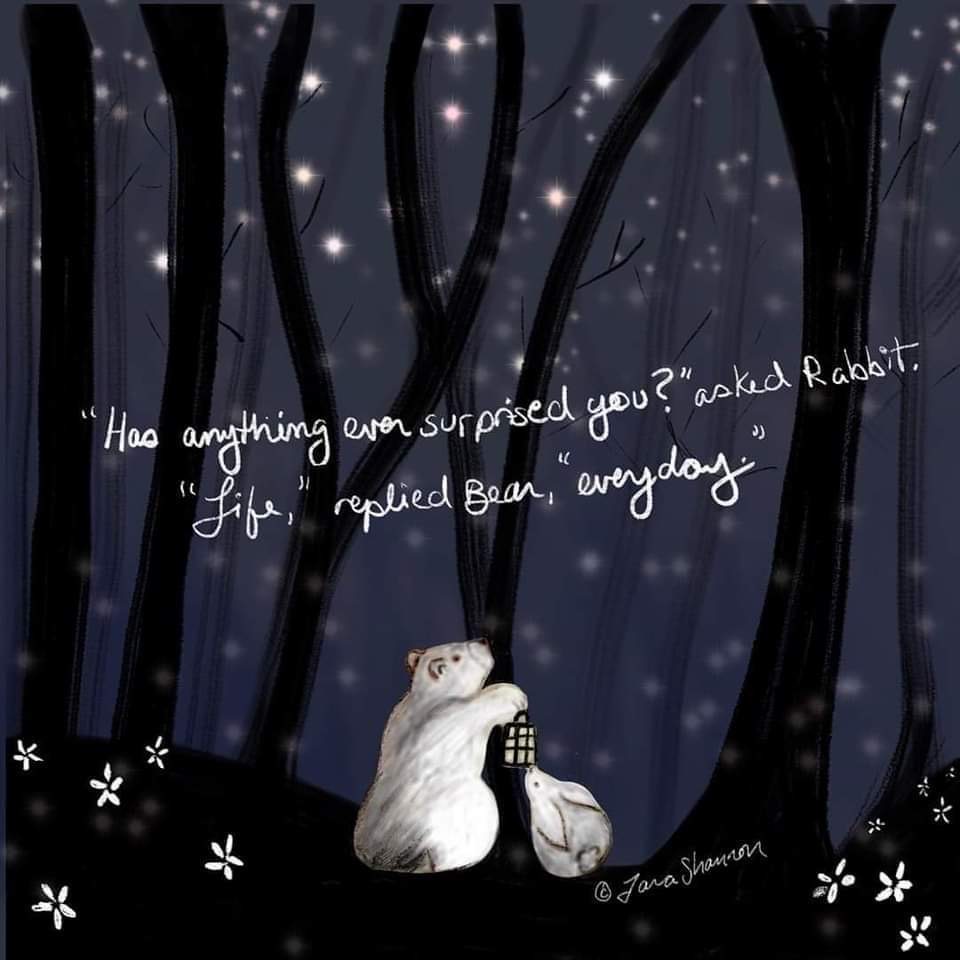
Image by Jana Shannon.
Managing POV can be tricky, so think about it before you rush in, and have a rough plan about how you think it will work. It can be lots of fun writing in a few different voices, but make sure they are balanced, that they are each different and that your one main character has first say and the final word.
Got a feeling you might be a writer? Do this quick quiz then add up your points and see how you go!
5 Sure Signs You’re a Writer
You READ – a lot. Is your bedside table, floor, desk covered in books half-read and to be read? Writers read voraciously and widely. Reading is your safe place and your sanctuary. Not only that, when writers read we’re always looking at how the book is written, especially books we love. We’re always thinking, “How did the author DO that?” Give yourself one point for every book in your pile.
You WRITE. Do you have a diary or journal you’ve been keeping for years? That’s a sure sign of a writer and the best way I know to develop your unique writing voice. Not keeping a diary? Do you write long letters, or emails or blog posts? Do you write to make sense of things? Write to bear witness? Does the act of writing give you pleasure? Does writing soothe you? Do you find comfort in shaping words into sentences and sentences into paragraphs? Give yourself 5 points if you write regularly. An extra 5 if you’ve kept a diary for over a year.
You REMEMBER IN STORIES. When you are remembering events from the past, do you find yourself writing the memory in your head? Are you forming a story with words rather than images, or images and words together. Are you trying to find a way to tell this story in a way that adds meaning to the random events of life? If so give yourself 5 points. If you’ve started writing these stories down, give yourself an extra point for every story you’ve started and an extra 5 for every story you’ve finished.
You DREAM IN STORIES or WAKE UP with story lines fully formed, or a CHARACTER wanting to be written. Do you remember your dreams and think, now THAT would make a great story! Do you wake up with the beginnings of stories in your head, with sentences, maybe whole paragraphs already formed? I woke up once with this: “My name is Condolezia, but I don’t speak Spanish. I was born the year after my brother who died the day he was born.” It was so strong I still remember it! Do you daydream in stories? Do characters tap you on the shoulder and demand to be heard, to have you write them into being? Give yourself 5 points if any of these nerdy, wordy visitations have happened to you. Give yourself an extra 5 for every story you’ve written from these prompts.
You FIND YOURSELF WRITING YOUR LIFE WHILE YOU’RE LIVING IT! This is a sure sign you’re a writer. If, in the midst of some life drama, turmoil, blessing or tragedy you find yourself searching for the words to describe it, then you are unmistakably a writer. The day my infant son died, I found myself sitting on the loo thinking about how I could ever write this terrible story. Thinking of a title. “Of Milk and Blood” I thought was pretty good. But I thought again and ended up with my Guide Through Grief instead. So if you’ve found yourself sitting among the wreckage, thinking up titles for this period of your life, then, I’m both afraid and proud to say – You, my friend, are a writer! It’s a blessing and a curse. Sometimes I just want to LIVE something without putting it into words. Give yourself 10 points if this kind of thing has happened to you.An extra 10 for every story inspired in a similar way, that you actually wrote.
SO, are you a writer?
IF YOU SCORED
0-5 points – you love to read, but haven’t actually spent much time writing or even thinking about writing. You’re happy to let others do the story telling. The world needs readers and we writers LOVE YOU!
5-15 points – you love reading and writing and a deep part of you is calling out to be expressed in words. All you need to do is give yourself a chance. Try getting some of those stories out of your head and onto the page! See here for a guided meditation to quiet that inner critic holding you back and get you started!
15 – 30 points – you’ve got what it takes to be a writer! In fact, you know it in your heart but you just need a little nudge to get those stories out of your head and onto the page. See here for a FREE WORKSHOP that will help you use all those great inspirations and thoughts to create stories.
30 points and over – CONGRATULATIONS! YOU’RE A WRITER! Yes you are! You know this, you’ve been writing and getting some of those ideas onto paper. Writing is a rewarding and fulfilling lifestyle. Writers are always observing and learning and creating meaning through words. Words bring comfort and order to our lives. We can create something beautiful from all we experience, even the darkest moments. See here for an affordable live online course in creative writing that will give you all the craft knowledge you need to make your stories engaging and compelling and, most of all, publishable!
WHATEVER YOU SCORED, if you’re reading this post, something is calling you to writing. Consider yourself on notice. Sooner or later you’re going to have to get those stories out of your head and onto the page. See my FREE WORKSHOP and then check out my UPCOMING CRASH COURSE IN CREATIVE WRITING
Let me help you set out on the magical journey of writing! I’ve been writing and publishing for over 20 years and have been teaching creative writing at universities, schools, festivals, at the Queensland Writers Centre and in the community since 2005. I’ve helped more writing students than most people have had hot dinners, so let me help you make a start on your writing adventures too. See more about me HERE.
Now, stop reading and start writing!
Wishing you the joy of creativity this holiday season. May you and yours connect in love and harmony and may the year ahead be filled with fun, creative adventures, lots of laughter and friends and fantastic good luck! YAY!
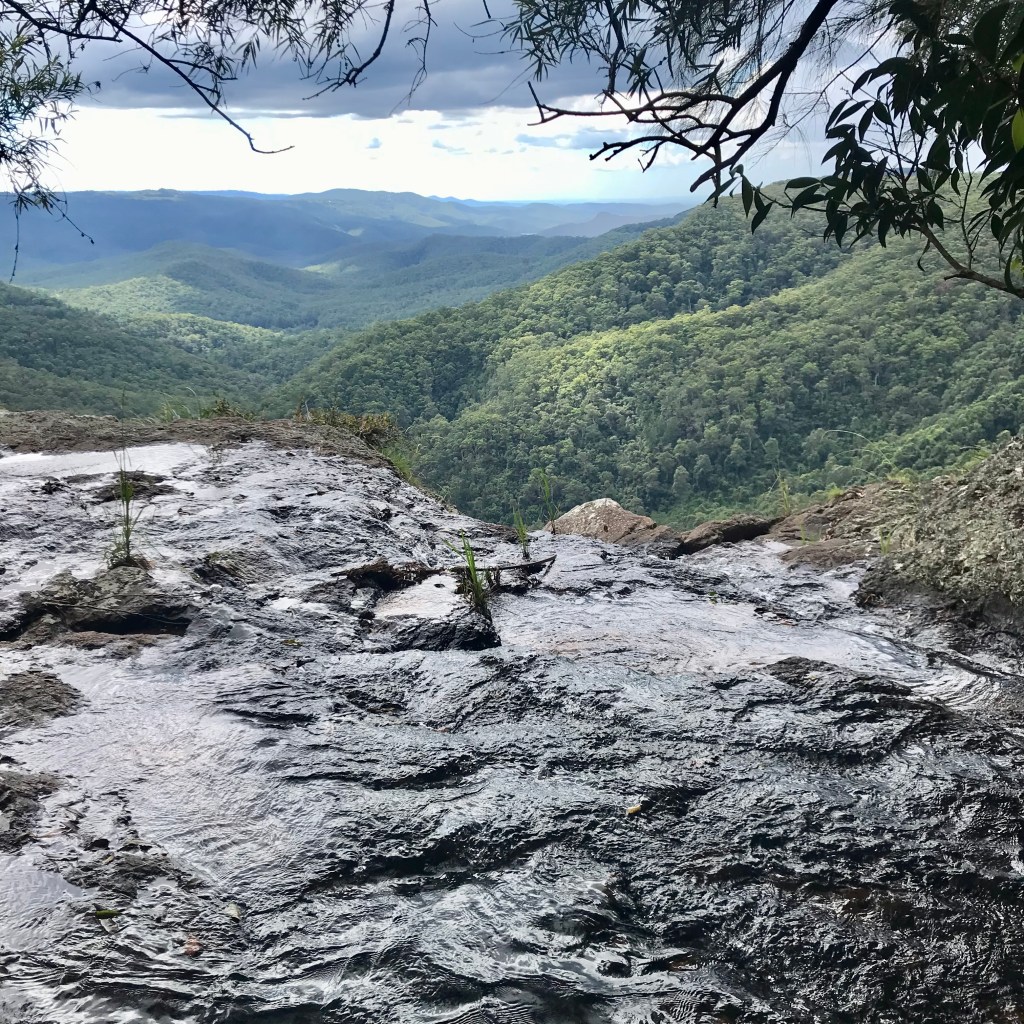
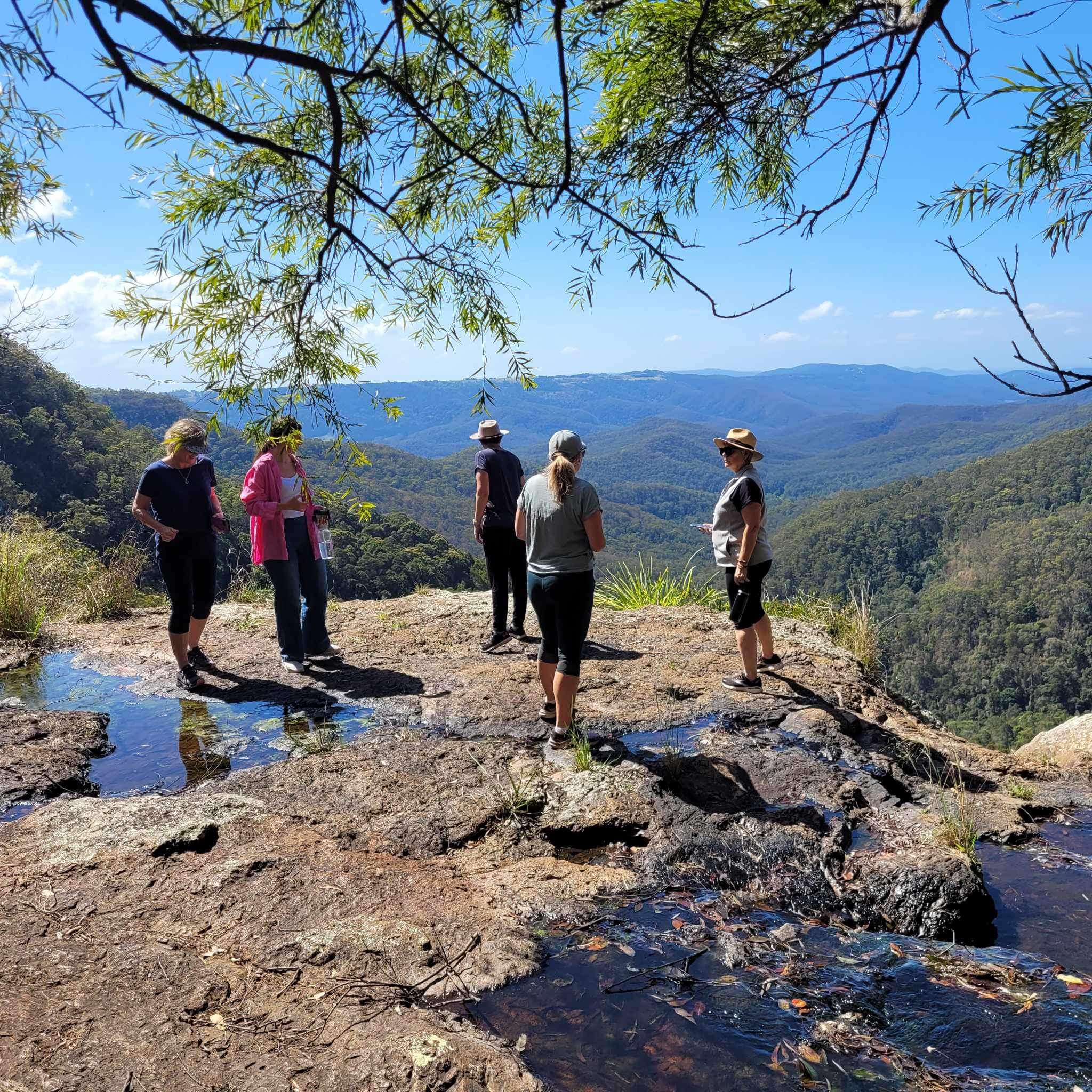
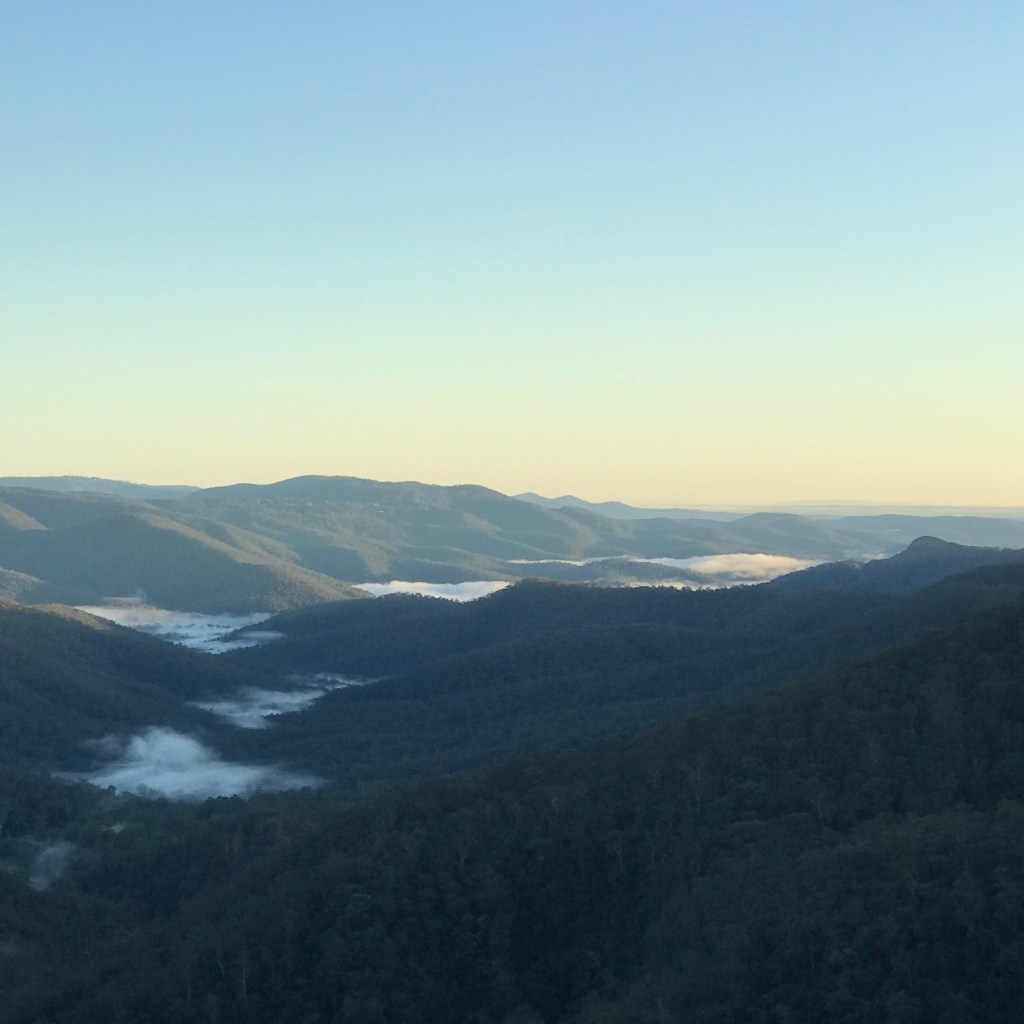
I’ve said it before, and I’ll say it again – Retreats are only as good as the women who come along, and this was another amazing group of inspiring, accomplished, compassionate and creative women. For the first couple of days, we lived in the clouds as if we were inhabiting a mystical land out of time where all that mattered was story and human connection. The sun came out on Sunday so we could see the view from the top of our waterfall and soak in the light and new beginnings.
The Misty Mountain
Over the retreat, we relaxed with yoga, got into the nitty gritty of redrafting in our workshops, created new writing goals for ourselves and had fun chatting around the fire and making collages. Our chief cookie, Gay, provided us with delicious warming winter meals THANK YOU GAY!!
Here’s what some of our retreaters had to say about their experiences over the weekend.
“I attended the Springbrook Relax and Write Retreat on 12-14 August, 2022. This turned out to be an amazing retreat. As a new author, I had no idea what to expect. I met the most amazing group of authors, ranging in age from 20 to me being the oldest at 76. They came from all walks of life and stages of their writing; and I found them very supportive.
One of the highlights for me was Edwina’s assessment of the first 10 pages of my manuscript and synopsis. We had sent these prior to the retreat, so she could assess them ahead of time. Then at the retreat, we met individually with Edwina for her to go over her suggestions with us and give us a written copy of this. I found this very helpful, comments on how to change to saying what I wanted to in a better way, specific feedback, picked-up on two important things which I had not realised were not clear to the reader, use of conjunctions rather than two words so it read more smoothly, and very positive. I left the meeting with Edwina feeling excited to continue editing my book.
Another highlight for me was the atmosphere. My life has included a lot of stress and the whole atmosphere at the retreat was relaxed and accepting. Each morning when I woke up, I simply felt peaceful. And I made friends who I hope to retain for a long time. I would recommend this retreat to any author. What a boost to my journey in writing.” Patty Sierra
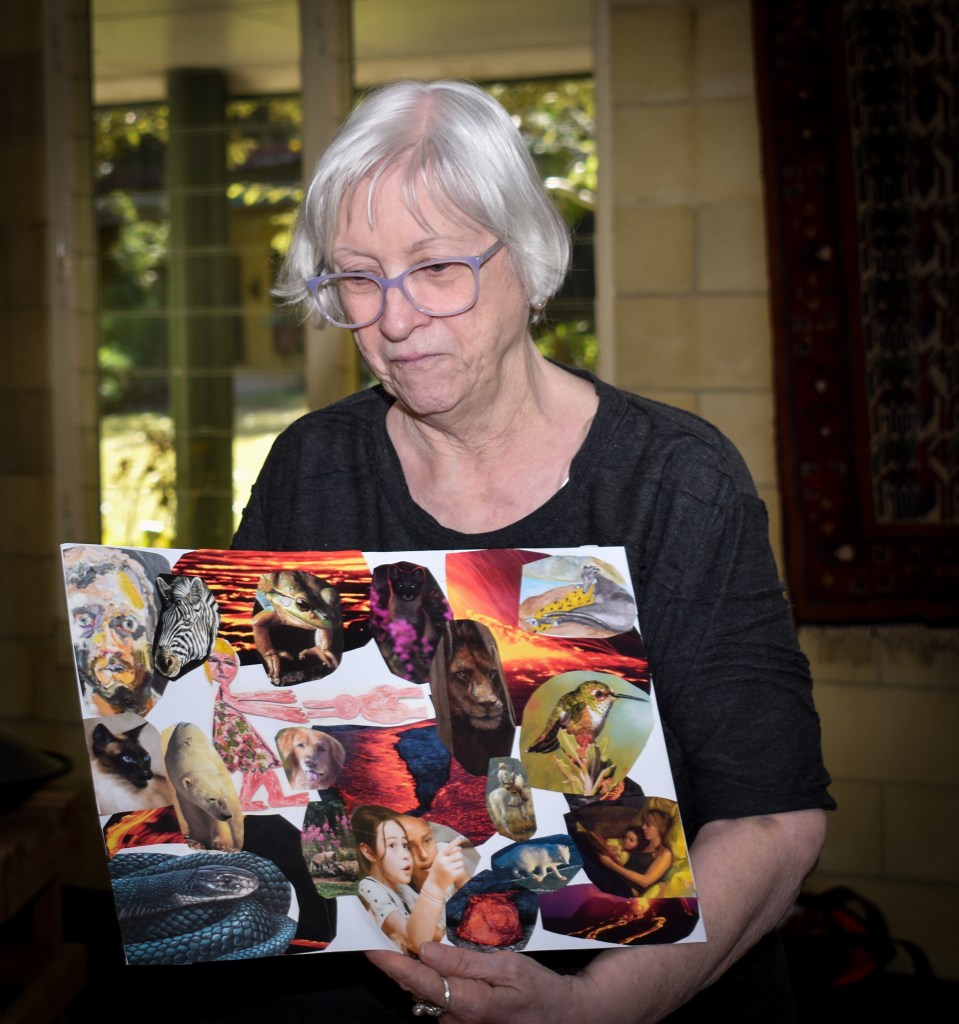
Patty and her collage 🙂
“This was my first writing workshop and there was initially some doubt as to whether I should do it because I am only starting out as a writer. I went and found it fully rewarding. I felt like a valued member of the group, and to me these workshops are not just about the skills and connections but the journey and self-identity. I gained confidence and more clarity about my future direction. I highly recommend Edwina’s workshops.”
Nina Curry-Powell
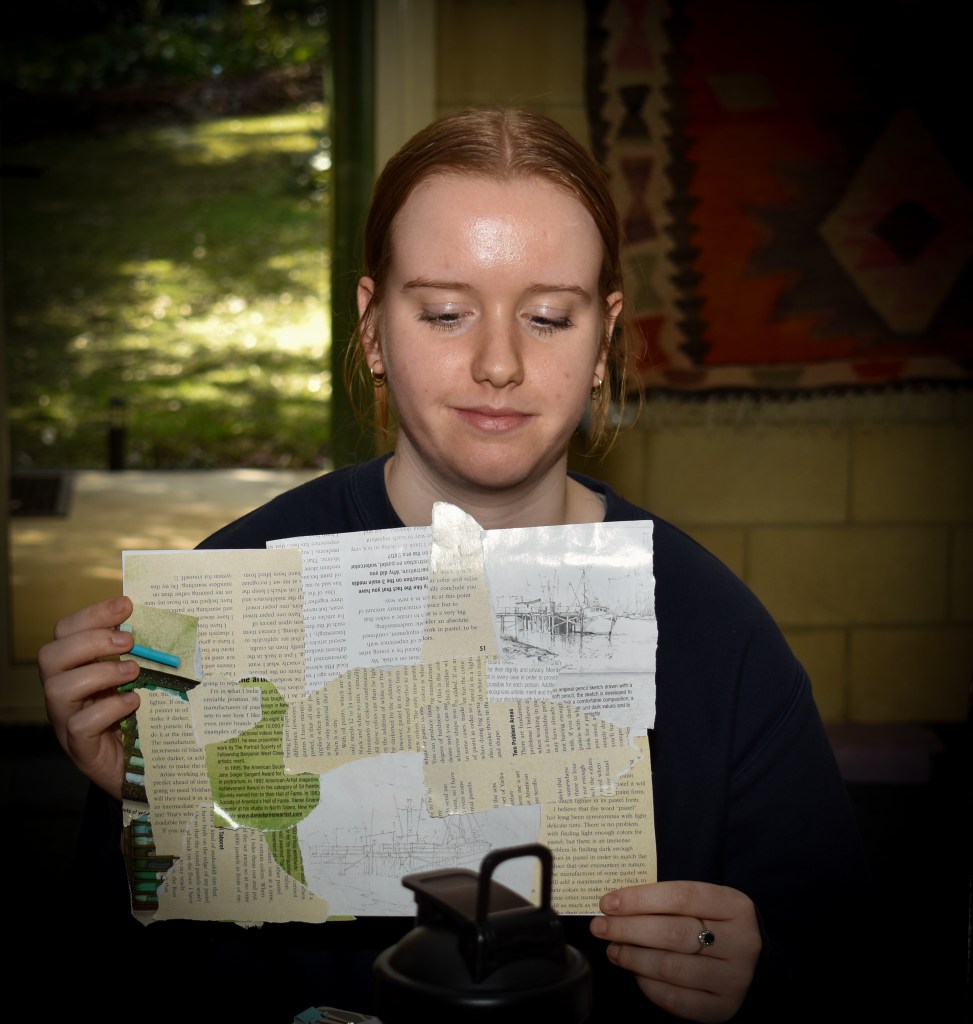
Nina and her interesting collage of words
“Thanks for a lovely weekend Edwina! It was such a wonderful change from my regular responsibilities and I really loved the beautiful surroundings and being able to have long chats about writing with other kindred spirits. I came home recharged, inspired and wanting to do it all again.” Nikki Mottram author of soon to be released crime novel Crows Nest.
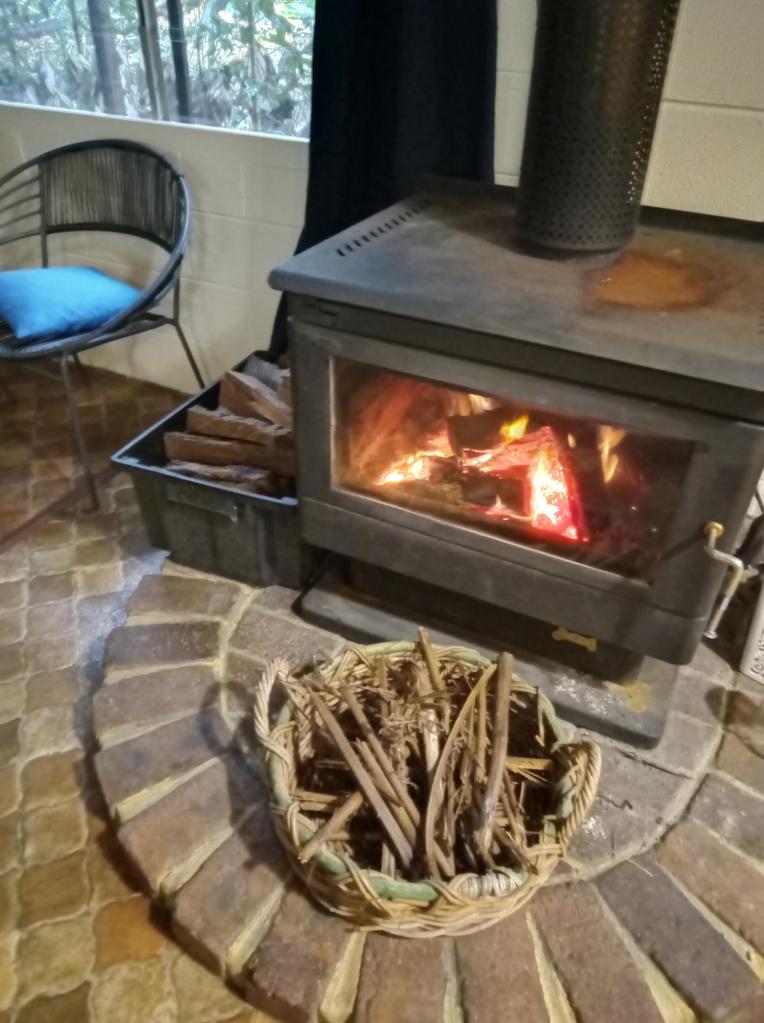
“Thank you Edwina for another amazing retreat. Springbrook was the perfect setting in the rain, with the wood fire, delicious home cooked vegetarian meals and a fabulous group of women. I was glad I sent you the ten pages, two weeks before, as it prompted me to get writing and it made what you were teaching more relevant. I really appreciated your professional feedback and after our session I felt more confident to share my writing with others. The gentle yoga and relaxation sessions were such a treat, as was the bodywork session with Monique. Definitely feeling relaxed AND I’m writing! See you again next year.”
Catherine Eadie (repeat retreater)
Catherine and her collage!
“Edwina is a passionate teacher and storyteller. She has a warm, down to earth way of connecting with people that makes everyone feel welcome. Her workshops are fun, creative and engaging — full of practical, helpful advice, and the deeper questions driving characters and story, making it ideal for writers at any stage in their work. I liked how Springbrook in the winter feels like a private retreat — tucked away in the Gold Coast hinterland, surrounded by national parks and hiking trails, with yoga workshops and the most amazing vegetarian food! Also enjoyed the late-night chats and readings by the fire, meeting and connecting with such an interesting group of women writers, who all shared a passion for great storytelling. I have to say that as a teacher myself, I am in awe of Edwina’s style of teaching and her ability to create a true, nurturing spirit of openness and community. At the end of the retreat, I felt connected to my work in a deeper way and like everyone else, totally inspired.”
Rebecca’s collage about her work in progress and the top of her mushroom beanie 🙂
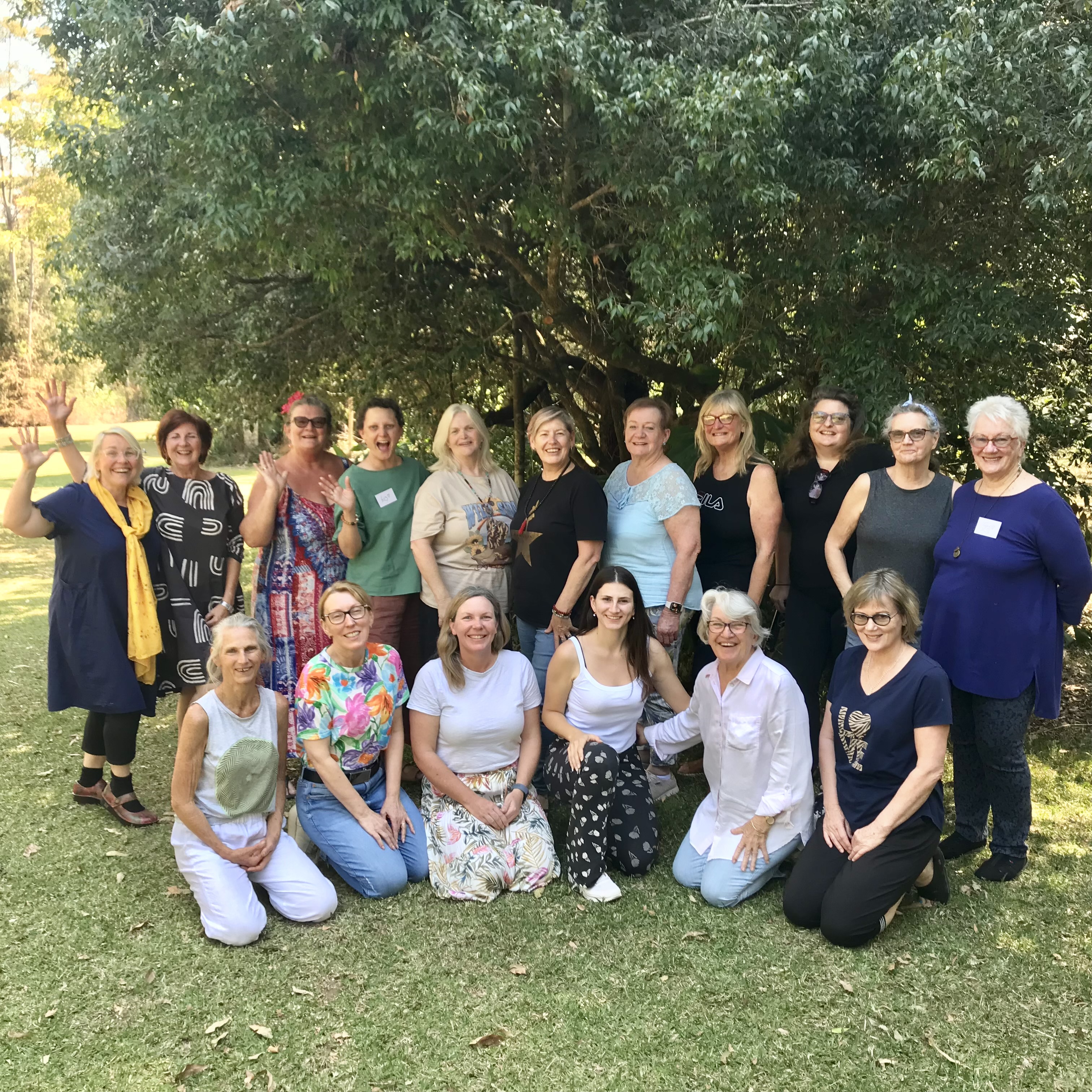
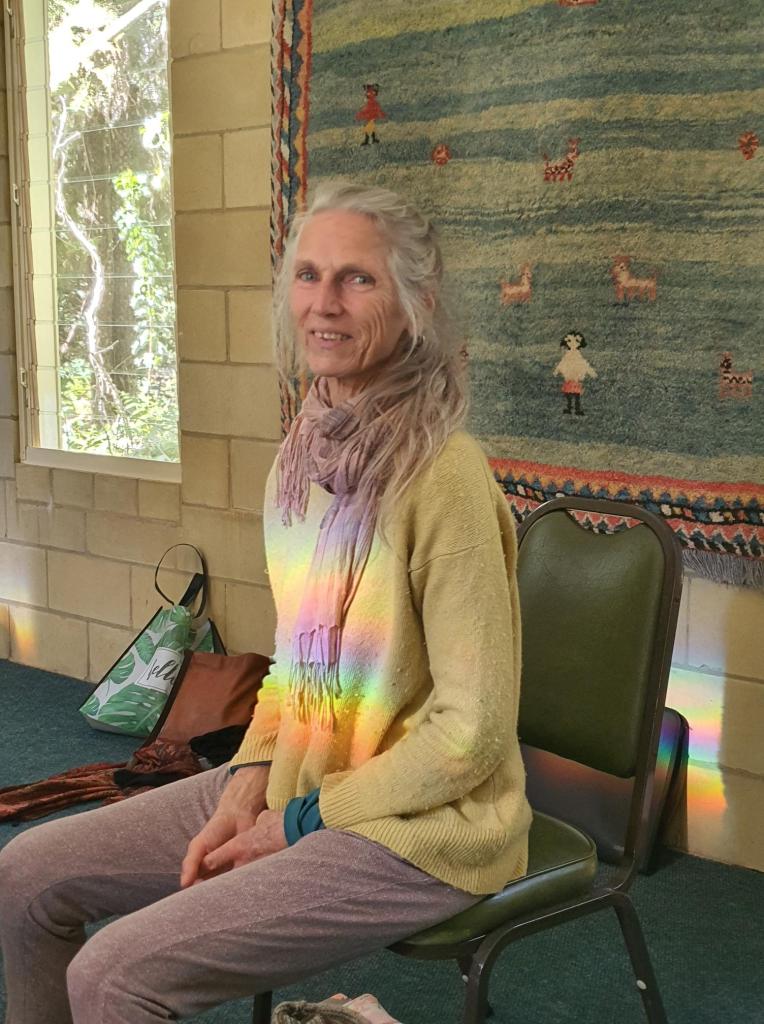
Here are some more photos to tell the story for us.
THANK YOU to all the wonderful women who made this retreat so special. These retreats are a lot of work, as Gay our super cookie knows, but it is all worth it when we see women connecting with new writing buddies and having epiphanies about their writing projects.
I’m thrilled to announce that we have been able to secure another permanent spot at the Theoshophical Society Retreat Centre for our life writing retreat in October. OCTOBER 21 – 23 LIFE WRITING AND MEMOIR RETREAT!
So what are you waiting for? Come along and join the fun. Wander through the rainforest to the waterfall, write up a storm in workshops tailored specifically for memoir writers, get cosy in your own private little nun room and feast on delicious home cooked vegetarian meals. This retreat is best for those doing life writing and memoir and for new writers just wanting to put their toes in the water.
So treat yourself to a weekend rebooting your creativity, reconnect with nature and make new writing friends to cheer you on your way. YOU CAN BOOK IN HERE.
Put yourself on the top of your TO DO list for once. Women and non-binary folk welcome 🙂
Lots of love
Edwina xx
The lovely women who ran the centre or headed the Theosophical Society for many years smiling down on us as we gathered in their space.
Almost everyone I’ve ever met has stories in their head that swirl around and around and won’t give them any peace, until they’re told.
Certainly, most of the people I met in my recent tour of Far North and Outback QLD had stories that they needed to get out of their heads and onto the page.
Writing these stories out and playing with them, using the techniques of fiction to transform the way we see them is a powerful way to get these stories out of our heads – for good! And BONUS we may even create something beautiful from all that pain. Because usually those stories that won’t let us rest are stories about the hard times.
But how to start?
Write a list of the stories on the top of your head – you know the ones.
What stories do you want to tell? Set the timer for 5 minutes and write down as many dot points or titles or other words that will remind you of these stories.
Write another list.What stories do you NEED to tell? Write for 5 minutes or until you’re done.
One more list. This is the scary one. What stories are you afraid to tell? If everyone was dead, if no one ever read it, what stories would you be brave enough to write?
Okay, now you have a list, your head should already feel a bit lighter. Lists are great for taking mountains and turning them back into molehills again.
Have you got a story about a car you used to have?
Now take your list and a pile of index cards and write one of your story ideas on each card and put them in a box.
Set aside some time each day for writing. It doesn’t have to be long. Participants in my workshops know that it’s amazing how much you can write in five minutes. Start there. Pull out one of your story cards, set a timer and write. Five minutes, 10 minutes. Start small and grow the time gradually. We can all spare five minutes, right?
Write as fast as you can, don’t stop. We call this free-writing. Just write. Forget about sounding fancy or poetic or writerly, just get down the story as if you were telling a good friend all about what happened. Spelling and grammar and punctuation really don’t matter at this stage. Just write like a fury and get that story out of your head!
Write all the way to the end of that story. Chip away at your story a bit each day until you reach the end of that bit. If you find it’s taking a long time, then consider breaking that story idea up into smaller chunks. For instance, instead of writing “CHILDHOOD” on your story list, be more specific, eg: my first bedroom, time with grandma, the bad day, my favourite pet, the secret. Break it up into little manageable pieces.
Don’t look back! New writers (and more experienced writers too for that matter) often make the mistake of going back over the first bits they’ve written and spending ages trying to make it perfect. NO! Don’t do it! It’s a trap!! Just keep going forward.
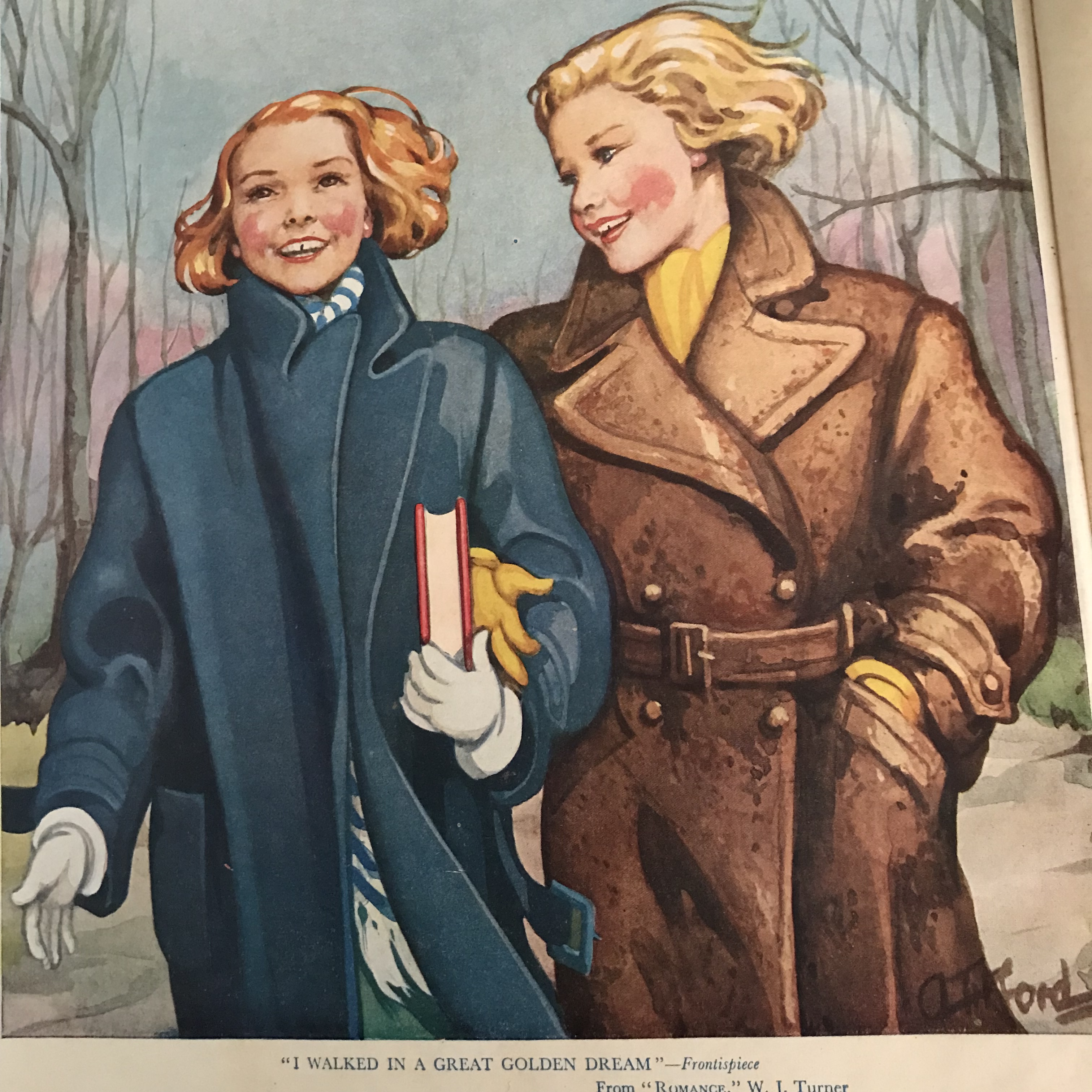
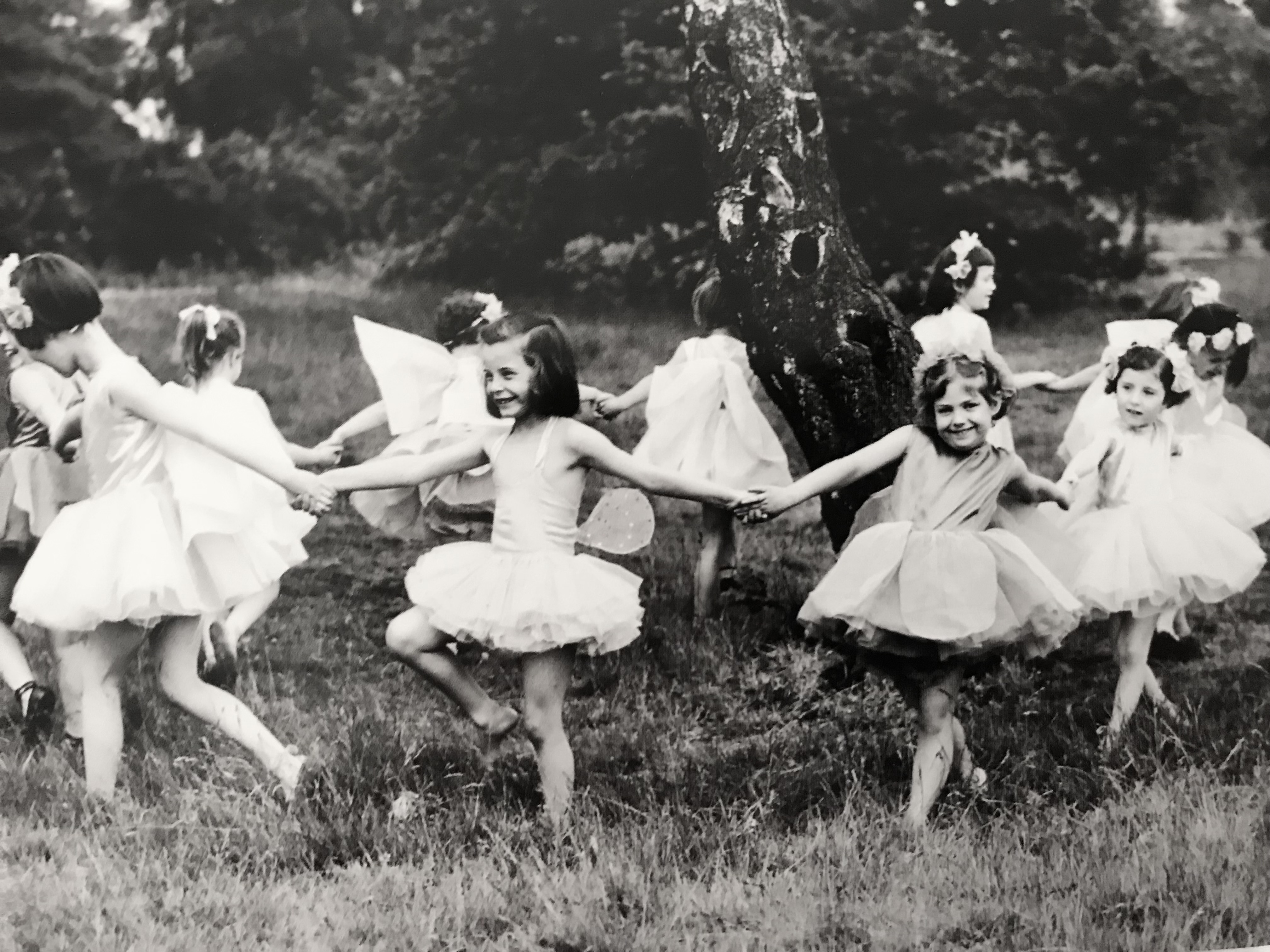
What stories do these images bring to mind?
Pick up a new card. Write a new story, and another and another, until your pile of cards is gone.
Writing is rewriting. Once you’ve got all your stories out of your head and onto a page, many pages, then you can go back and add specific sensory details, make sure you’re writing in scenes and order the pieces for narrative drive. But if all that doesn’t make any sense, don’t worry. Just get those stories written down. You’ll become better at writing just by doing it regularly. You may notice when you start putting your stories together that there are gaps. Fill them in. But not all the boring in between, day to day details, just the important things we need to know.
JUST START!YOU CAN DO IT!
If your literacy skills aren’t great, don’t worry – use the dictating feature on your device. Some of the best story tellers I know aren’t any good at spelling. It doesn’t mean they can’t spin a good yarn.
So, what are you waiting for? Get cracking on those lists and let me know how you go. I have lots more hints and tips for writing on the website. Or drop me a line and I’ll do what I can to help.
Wendall’s main message was this – Structure your plot through character decisions.
As we know the very best plots spring from the intrinsic motivations and flaws of our characters. Their goals, hopes and weaknesses create meaningful plotlines that are compelling because we are invested in the characters. Alternatively, plots that are imposed on characters can feel contrived and don’t have the same emotional drive that keeps us reading.
According to Wendall, each decision has three elements.
MOTIVATION – what situation/idea/goal/event forces a decision upon this character?
DECISION – what choice do they make in response to that motivating factor?
And finally
CONSEQUENCES – what events does the characters decision set in motion?
These elements remind me of my days teaching kids with behaviour disorders in juvenile justice centres. On every wall were posters proclaiming a very similar process to get them to reflect before they took rash actions that could potentially land them in even deeper trouble. STOP. THINK. OPTIONS. CONSEQUENCES. ACTION.
Stop and Think before you act!
A character has to act not just react. This process of shaping the plot through their decisions forces them to take active responsibility and turns a sappy passive protagonist into a vital force in your story, novel or screenplay.
In all forms it’s important to transform these internal decisions into external actions. To not just say, Bobby realised that killing the cat would get him in trouble, but to show Bobby, swinging the cat by the tail until it shrieked, but then stopping, holding the cat to his chest, wrenching its face up to look in its eyes, then setting it free.
Dora Marr – Boy with Cat
Each decision has its consequences. Some good, some bad. As Wendall kept saying – every decision takes your character one step forward and then two steps back.
Let’s just say Bobby made that decision to set the cat free, but it was wounded and someone had already seen him with it. When it limped home, the owners called the police and Bobby was arrested. As the police approach him Bobby starts throwing punches, swearing and reacting as he’s always done, but one of the officers speaks kindly to him and Bobby thinks better of it and calms down. Goes with them peacefully.
After the inciting incident that sets up our story, the protagonist must decide whether or not to take up the challenge it presents. Once they do, they are propelled into the second act and continue to make decisions that move them one step forward and two steps back all the way through to the climax. Some decisions seem sensible, but others, motivated perhaps by their fatal flaw or a deep-seated weakness, we know from the start are only going to make things worse, much worse.
At the watchhouse, Bobby is taken aside by a corrupt officer who tells him he’ll let him go if he becomes an informer and feeds him information about the drug running bikie gang Bobby’s violent uncle heads. Bobby shakes the corrupt officer’s hand, puts the cash in his pocket and we know things are only going to get a whole lot worse from here.
So remember, MOTIVATION, DECISION, CONSEQUENCES and show us those decisions in ACTIONS that manifest the characters feelings and realisations.
As we hurtle towards the climax of our stories, propelled by decisions that really aren’t going so well, the decisions become increasingly reckless as the character is put under more and more pressure. Consequences get more and more dangerous.
Let’s say after informing a couple of times, Bobby sees Uncle Roger stash a couple of gym bags full of cash under the house before he heads out on his Harley. Bobby gets his phone and clicks on the police officer’s number. But then, just as the officer answers, Bobby shoves the phone back in his pocket, and scrambles under the house, emerging with a bag full of cash.
Then he turns up at his young girlfriend’s place and tells her to pack a bag. They’re both heading off down the street when the cat he hurt crosses their path. His girlfriend stops to pat it and they waste precious time. The bikie gang roars around the corner.
UHOH!
Decisions that your character makes early on in the story manifest themselves in consequences in the final act. Bobby’s decision to become an informer brings him into all sorts of dangerous circumstances he could have avoided. Even the cat plays a role in delaying his escape.
In every book you read and every film or TV show you watch, keep an eye out for how those character decisions are shaping the story.
And if in your own story your character isn’t making any decisions of their own, but is only reacting to external forces, give them some backbone and get them making decisions to give your plot a whole lot more OOMPH!
Start making history with your stories
Hope that helps you whip your stories into shape.
Keep smiling and keep writing through all the madness now surrounding us.
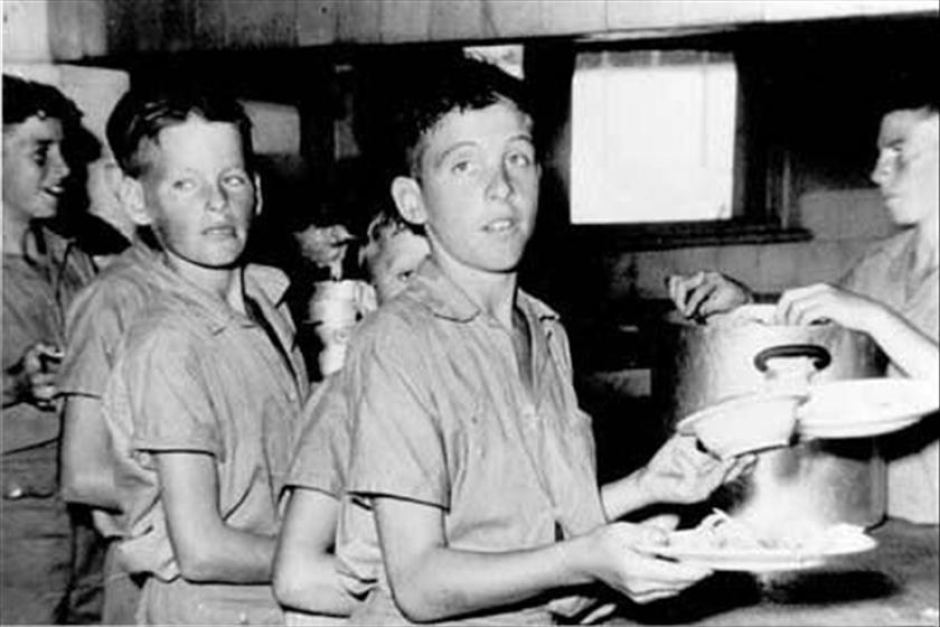
These children were starving and abused, told they were rubbish
I’ve been working with Forgotten Australians – those who suffered institutional and/or out of home care as children – for several years here in Brisbane. But earlier this year, before COVID kept us all inside, I toured around my home state of QLD with program manager, Katie McGuire, facilitating workshops in regional centres.
As with all of my work with these extraordinary survivors, I was blown away by their stories and their resilience and willingness to try everything I threw at them.
We called our workshops The Healing Power of Story and part way through our travels were interviewed by local ABC media.
It is a great privilege to be able to contribute even a little towards helping these incredible people heal the pain of their traumatic pasts. As I say in the interview, once I met them, there was no way I could ever leave them.
They were trained to be domestic servants or labourers and given very little formal education
People like the Forgotten Australians exist in every community. Here in Australia they have been recognised and services like Lotus Place are now available to them, but in many countries this is not yet the case.
Being with them has taught me to never, ever, walk past a homeless person without a smile and a hello. To never judge a book by its cover and to always listen and wait for a story to unfold. You never know what hell a person has been through.
And yet they’ve managed to come through with wide open hearts and great kindness of spirit.
Lotus Place and other similar organisations are always looking for volunteers to help out with programs like these, so do get in touch if you’d like to contribute.
As writers our primary aim is to keep our readers turning pages, engaged with our stories. Yes, we’re really quite wicked. We like to keep our readers up all night. We also like to make them cry. And laugh too if we can. We want our readers to feel something, to be moved by our stories. And maybe, just maybe, to be changed a little, for the better.
But in order to do that, first we have to get them to finish our story. So we need to have narrative drive, suspense. Forward motion.
We do this in a number of ways.
SET UP QUESTIONS
We set up questions at the start of our story – that’s our hook. Depending on whether you’re writing a novel or a story those questions will be big – Will Tracy survive the volcanic explosion? Or small – Will Bill make peace with his father? Actually, maybe all story questions need to be big – Ben making peace with his father is enough for a novel – probably more than Tracy and her volcano. And of course, if we put the two together…?
CREATE A CRUCIBLE SITUATION
That’s the true secret of creating tension in your writing. It’s what Sol Stein calls “The Crucible Situation”. A crucible, apart from being a great play about witches, is an old fashioned term for a cooking pot. In modern terms we’d call it a pressure cooker.
What it means is that you put your story and characters under pressure. Put them in a situation they cannot easily escape from.
Enemies are trapped in a lift together. Ex-lovers are forced to work together on an important work project with the boss watching on. Estranged siblings are forced to organise a 90th birthday for their mother together. Or a couple break up then are stuck together quarantined on a cruise ship. A bomb has been put under the building where warring families have come together to hear a will being read.
THROW IN A TICKING BOMB
The ticking time bomb works a treat. Not only can you throw in a crucible situation but also a time limit. Like Cinderella only having until midnight before she loses all her finery. Like that volcano about to explode. Like that tsunami wave dragging far, far out just before it crashes in. Like a lover about to leave forever on a plane (hence all the rom coms that have one party running through an airport at the end)
Let’s just say your story idea is about Ben whose father was a mean and violent alcoholic in Ben’s childhood but has now reformed and is trying to make amends. Yes, lots of story material there.
We’ve got out hook question – Will Bill make peace with his father?
Let’s add a crucible situation – Let’s say Bill has a sister and it’s her wedding. She’s forgiven their father and has asked Ben to play nice for her wedding. Ben is stuck with his old man for a whole day and night. They can’t escape each other. Plus, there’s alcohol.
And a time bomb – Ben’s dad has cancer, a bad one. He’s been told he only has a few months to live. Now the pressure on Ben to make peace is urgent.
That should keep your reader turning pages.
Hope those ideas help. Use them on a story you’ve already got that may be lacking oomph. Add a crucible situation and a time bomb and watch them blossom.
Wherever you are, whatever you’re doing, in these crazy days of limited movement and social interaction, we still have a great power that no one can take away from us – our imaginations!
Yes! Through our imaginations we can still wander, all over the world if we like. We can create miracles, climb mountains, swim to the bottom of the deepest oceans and all without expensive equipment.
All we need is a little time and the ability to daydream. Never has dreaming and imagining been so important. We need to envision a new peaceful and positive way forward for our world, so that all this grief and loss brings good and long-lasting healing to our beautiful planet and all her people and animals.
So here are a few prompts to help get you started on using your imagination and letting it take you to places you may never have been before.
Your Favourite Place in Nature
We may not be able to get out much these days but in our minds, we can still travel to our favourite places.
Close your eyes, focus on your breathing and take yourself to your special place, your favourite swimming hole or beach or forest or dessert or field of poppies.
Use your five senses.
What colours and shapes can you see? What is the quality of the light? When you look up what do you see? Look down. Look all the way around, stretch the working of your mind’s eye.
What can you hear? Is there the trickle of water, or the wash of waves against the shore? Are leaves rustling in the breeze? Can you hear birds singing, animals foraging in the undergrowth? Maybe you hear voices? You can have companions on these mind journeys too.
What can you smell? Is the air salty, or sweet and musty from the lush undergrowth of the forest? Maybe you smell pine trees, or the fresh sweetness of mountain water.
What do you feel? Is the sun warm on your back? The breeze soft on your face? The earth deep and yielding under your feet? Sand gritty between your toes? Water fresh and tingling on your skin.
What can you taste? How does the air taste in your mouth? Take a mouthful of that mountain stream, taste the sweetness of the water.
And how does it all feel in your heart? How does being in this special place make you feel emotionally?
Once you have envisioned it all and dwelt there awhile in your imagination then get writing and fill in all those specific sensory details to bring your special place to life so that anyone reading your piece will feel as if they have been there with you.
All the Good that Will Come from This
This is a wonderful exercise to do whenever you feel yourself stuck in a difficult situation, as we all are right now. Use your imagination to see a positive and powerful new future for us all. Even in the midst of all the tragedy now unfolding in many places, there is still good. There is still hope.
Close your eyes again and envision all the potential for healing and the creation of new and better ways of being which can come from this enforced pause of human activity.
For me the ozone layer healing is a great and wonderful positive that I hope we’ll find a way to maintain. Plus we’re all getting a chance to slow down and pull back from some of the many hectic activities that usually fill our days. This situation has certainly brought into focus what’s most important to us. What we value most. And for many of us, it’s our people, our family and friends. Spending more time with family is also, in most cases a lovely plus to come from all of this. On my daily walks I’m seeing more and more people out enjoying nature now the gyms have closed. Another positive. People are pursuing more creative arts, learning new skills, learning to meditate or do yoga, playing musical instruments that have been collecting dust for years. Gardening. All these small things as well as big things like ceasefires, and fresh air and blue skies over cities that haven’t seen a blue sky in decades. All these and so many more.
Write a list of at least 10 good things that can come from this. If you’d like to you could develop this into a short story about a utopian future, a future where we create a new world where resources are shared, greed is no more, and all the world lives in peace and harmony with each other and with nature.
Write Yourself Friends
For many people this is a very lonely time. Especially for those who live alone. It’s at times like this we really need our friends and hugs.
You can write a letter to a real-life friend, telling them all the things you value about them and remembering some good times that you shared. Post it the old-fashioned way and give them a treat in the mailbox.
Or you can imagine a whole new friend for yourself, a best friend, a lover even.
What do they look like? What kind of clothes do they wear? Why do you like them? What do they do for work? What makes them so special to you? Flesh them out like you would a character, fill in all those little details, star sign, sense of humour. Create the perfect online profile of someone you’d just love to meet.
Then imagine meeting them, hanging out and doing something fun.
Write the story of that first meeting, that buzz of electricity when you meet someone you click with. Whether it’s platonic or romantic, there’s still a rare thrill that comes from meeting a kindred spirit.
So write away. Get them to tell you what they like about you too.
And remember, you can write yourself as many hugs as you need!
What have you been writing during this strange time? Have you been able to write?
Your imagination is a powerful tool. As writers we know how to use it – now wield your power for good.
Write up a storm and keep smiling. Let me know how you go with the writing prompts!




































 RELAX AND WRITE